
Polished concrete garage floors: what to know before you decide
A garage is the floor most people in Bunbury and the South West ask about after the living areas, because it is the one slab that is already bare. The question is whether polishing suits a room that cars, bikes, tools and oil live in. Mostly, yes. This is what to weigh up.
Why a garage suits a ground floor
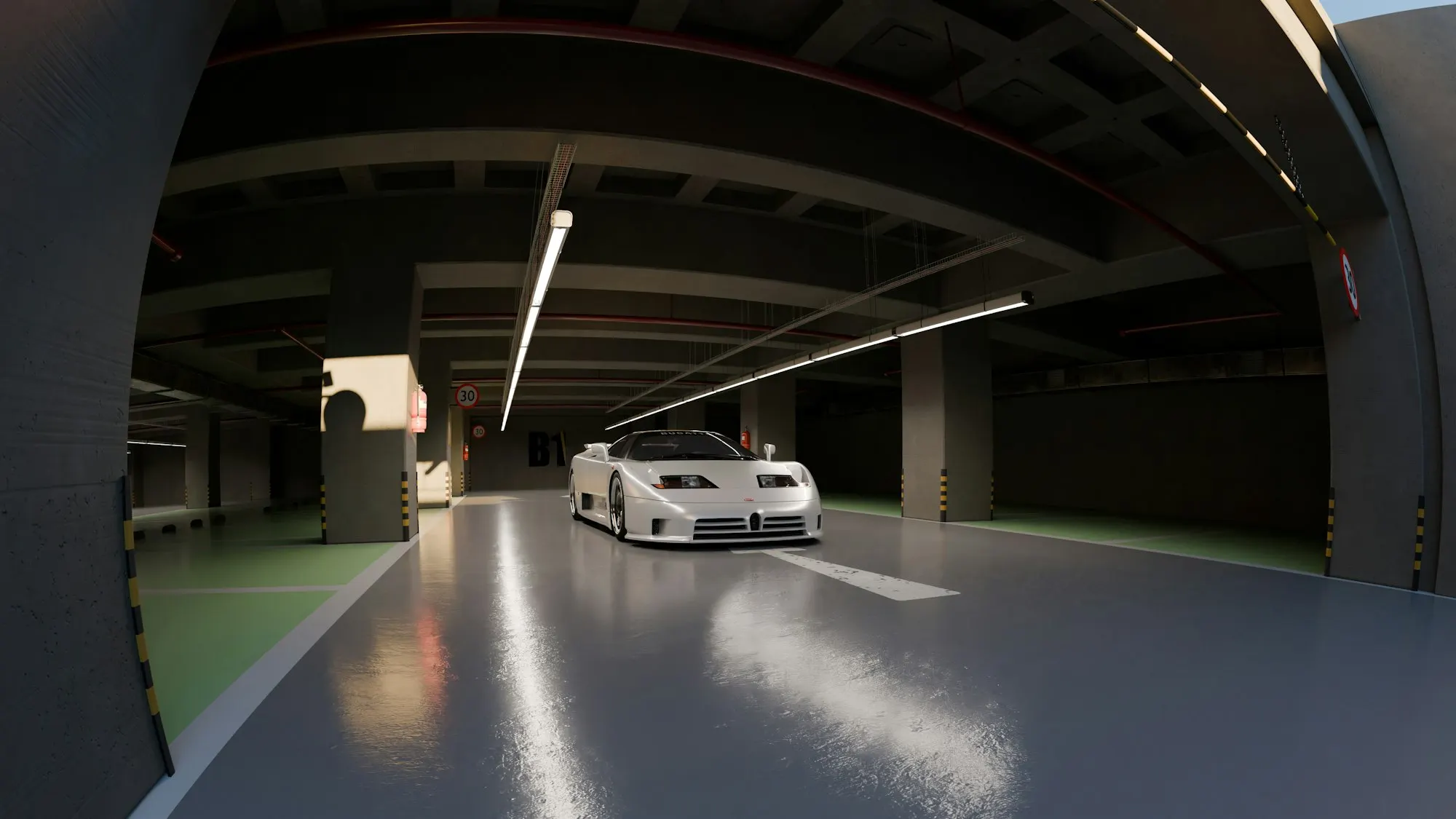
A garage slab takes hard use, and the finishes that fail in garages are the ones that sit on top of the concrete. Paint peels, and coatings lift under hot tyres. A polished concrete floor is the slab itself, ground, densified and sealed. There is no film to peel, it does not dust, and it sweeps clean. Water, mud and sand off a boat or ute mop away.
Pick the sheen for the use
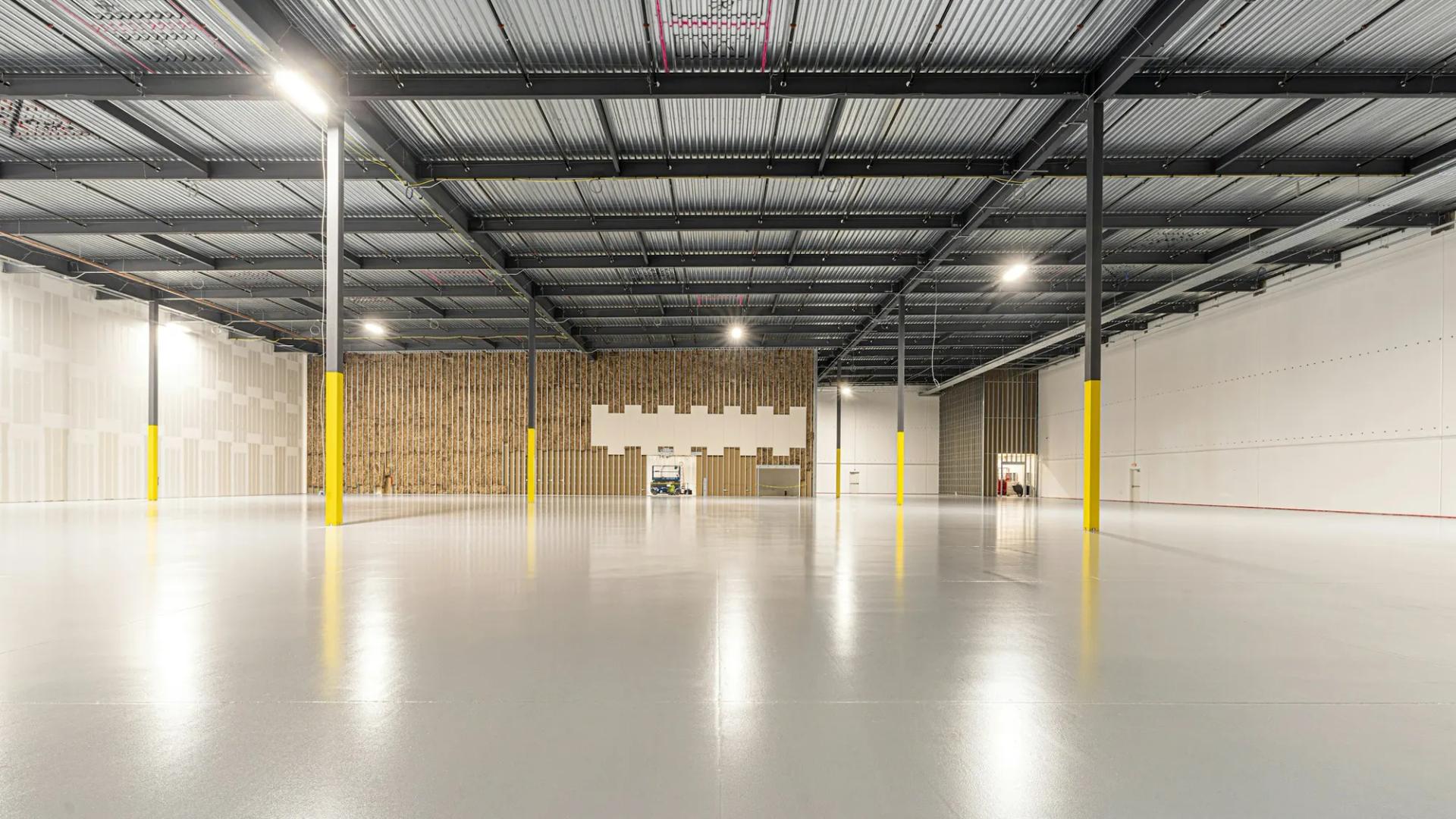
A high-gloss floor shows every tyre scuff, sand grain and drip. For a working garage we usually suggest a matte or satin level, which still looks finished but hides daily mess. If the garage doubles as a workshop or gym, a lower sheen also has more grip. For a large shed floor that mostly sees forklifts or a trailer, burnished concrete gives a soft sheen with less grinding, which suits a bigger area.
Tyre marks, oil and salt
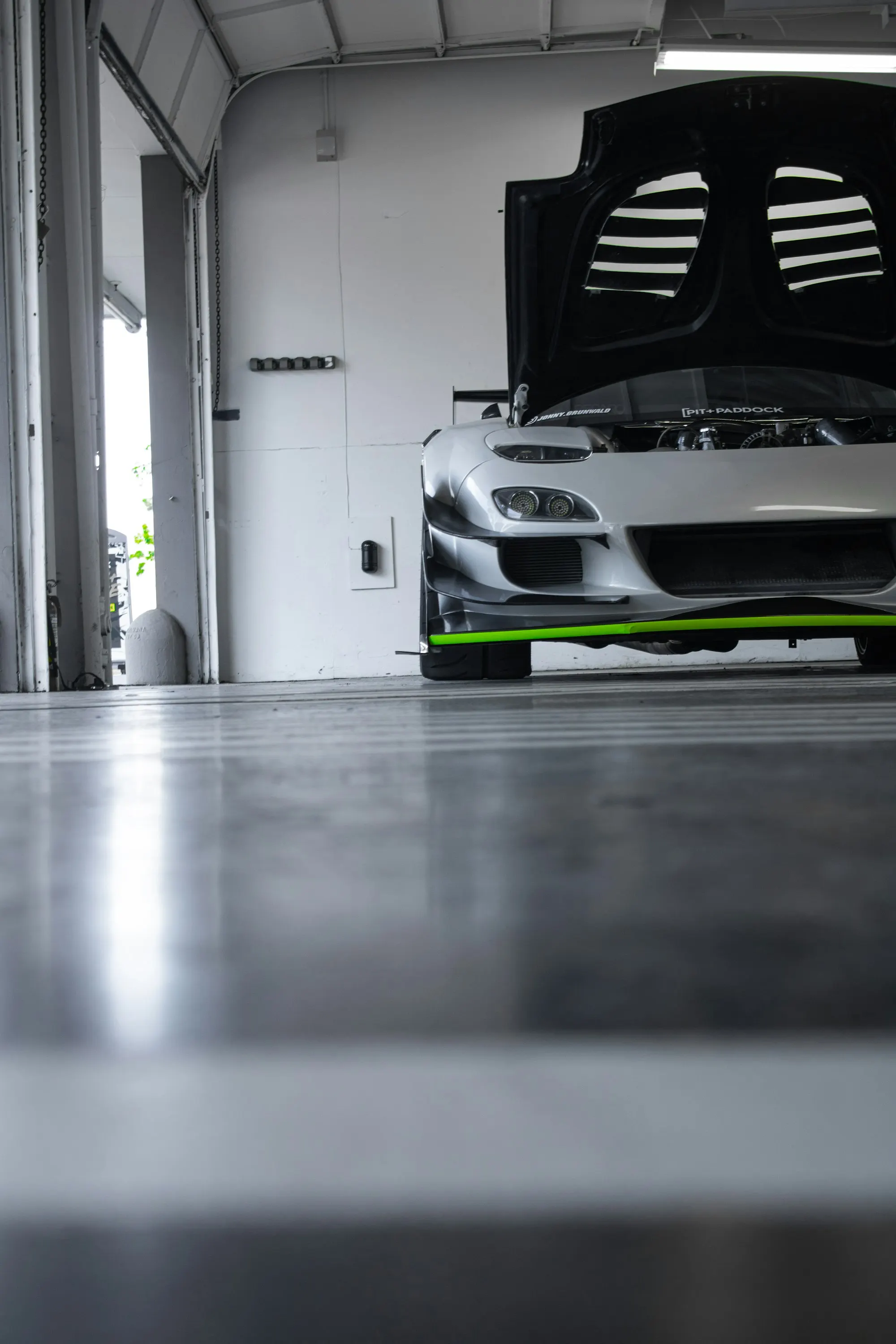
- Tyre marks. Rubber transfers to any smooth floor. On a sealed polished surface it sits on top and cleans off with a neutral cleaner and a brush. A mid-grey slab hides it better than a pale one.
- Oil and fuel. A penetrating sealer slows oil soaking in, but it does not make the floor proof against a drip left for a week. Wipe spills when you see them. If the car drips regularly, a tray under it is simpler than a floor that fights chemistry.
- Beach sand and salt. Common down here. Sand is abrasive, so sweep it rather than let it grind under tyres. Salt water does not harm the slab, but rinse it off the sealer.
New slab or existing slab
A new garage or shed slab poured by us is the easy case. We place it with the finish in mind: the right mix, a flat trowel and no curing compound that has to be ground off later. See house and shed foundations for how we pour slabs.
An existing garage slab can usually be polished, but it comes with history. Old paint and glue grind off. Cracks get filled and stay visible as a line. Oil that has soaked deep can leave a shadow after grinding. We tell you which of these apply before we start, and we would rather you know about a stain that will stay than find it afterwards.
Garage, shed or both
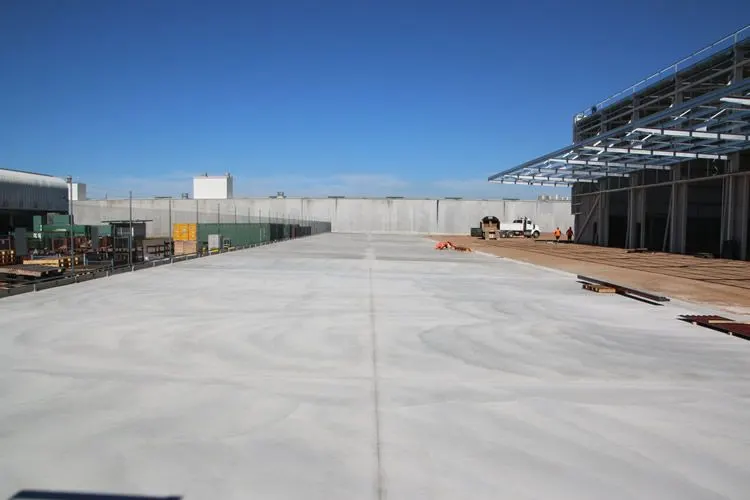
Many homes in the South West have a garage attached to the house and a separate shed. The same crew can do both, and the slab planning differs: a shed slab for a vehicle hoist or heavy racking is designed thicker than a garage floor for two cars. If you are building, tell us how the space will be used, and we will plan the slab and the finish together. For a side-by-side of the ground finishes, see polished vs honed vs burnished concrete.
Where we work: Bunbury and the South West of Western Australia.
Common questions
- Is polished concrete good for a garage floor?
- Yes, with the right sheen and sealer. A matte or satin polish hides tyre marks and dust better than high gloss, and a penetrating sealer keeps oil from soaking in if it is wiped up.
- Do hot tyres damage polished concrete?
- No. Hot tyre pickup is a coating problem, where the paint or epoxy lifts under the tyre. Polished concrete has no film to lift. Tyres can leave rubber marks, which clean off.
- Can you polish the slab in my existing garage?
- Usually. We check for oil soaked into the slab, old paint, cracks and how flat it is. Deep oil stains can stay visible after grinding, so photos of the floor help before we quote.
Related services
 Service
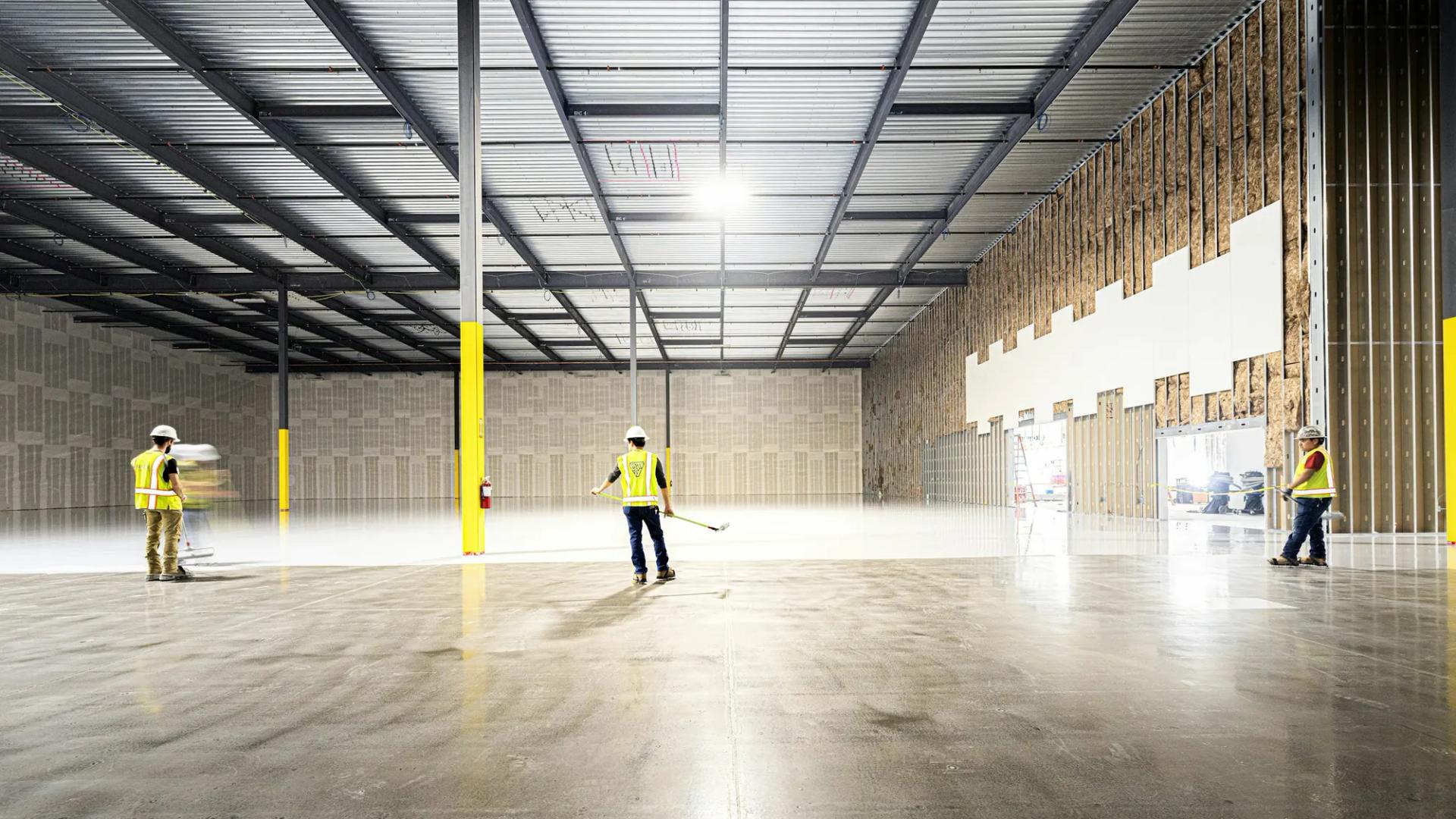
Polished concrete
 Service
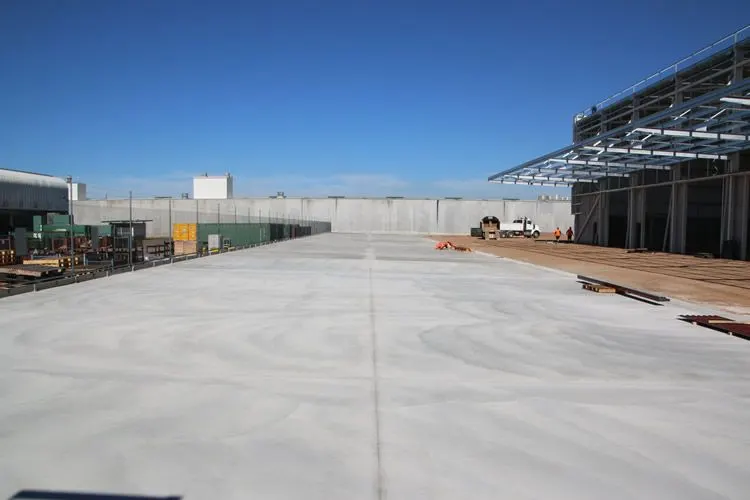
Burnished concrete
 Service
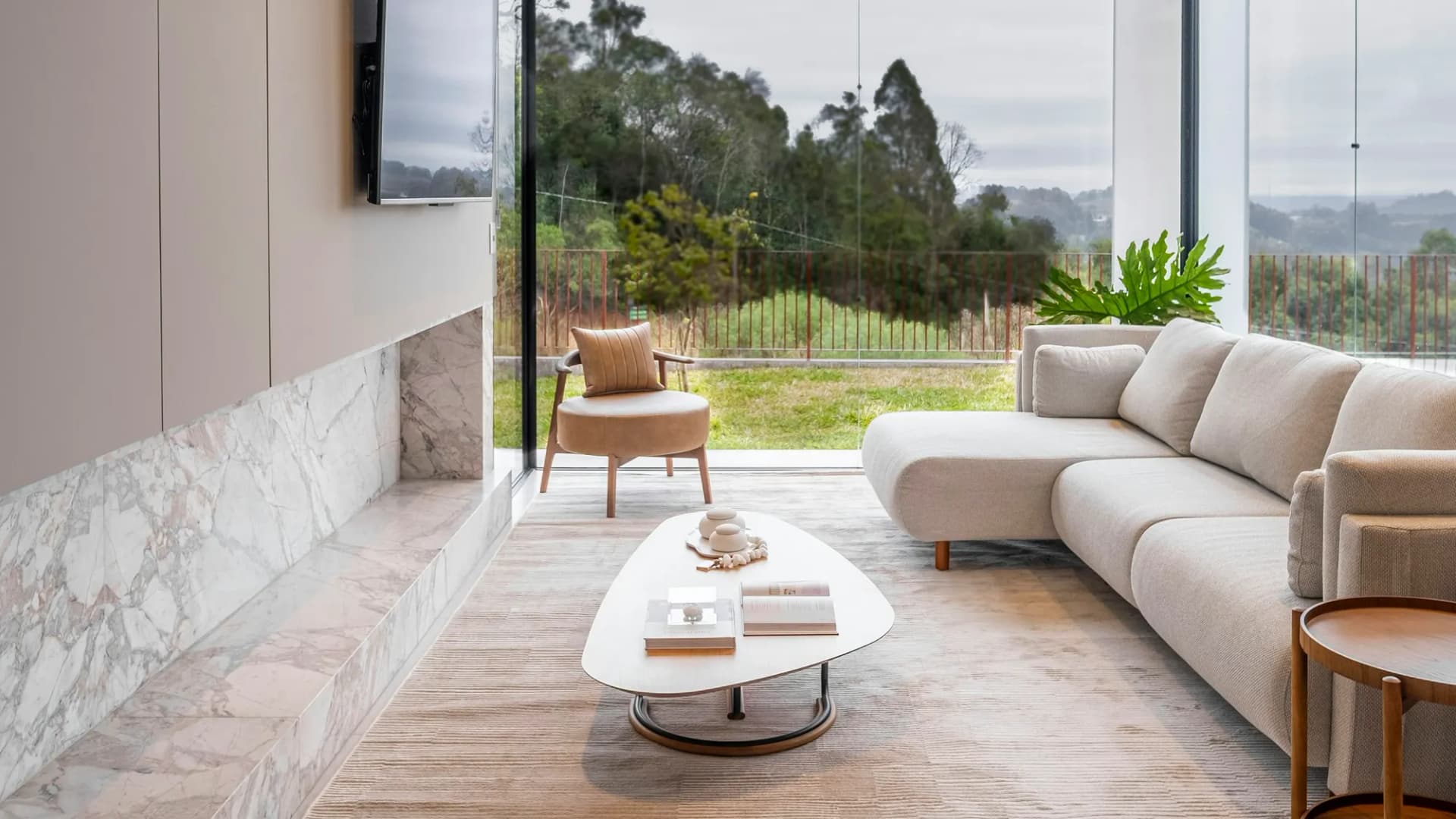
House and shed foundations
 Who we work for
Residential

More guides
 Guide
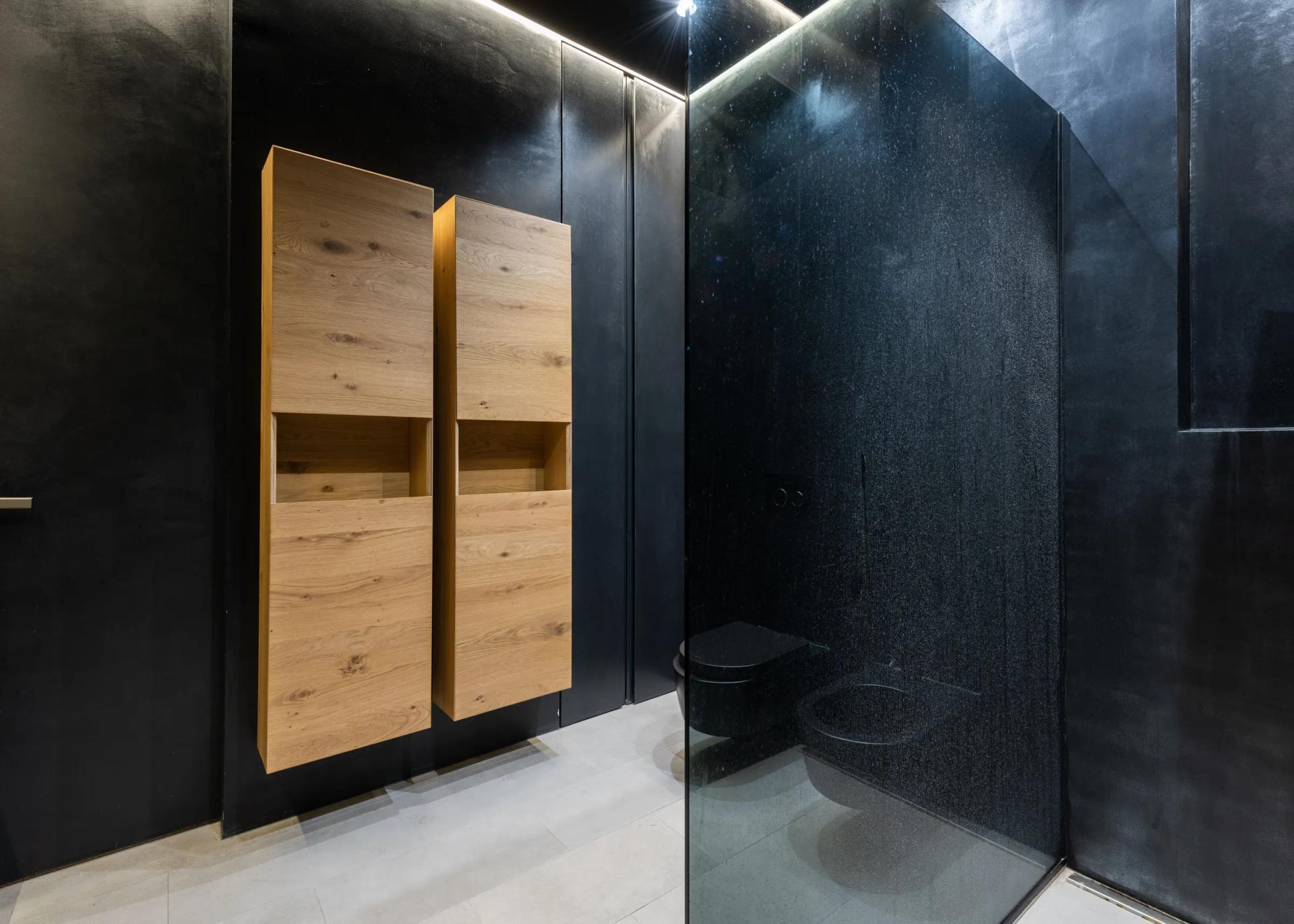
Polished concrete bathroom floors: waterproofing, falls, grip and walls
Polished concrete bathroom floors in WA: where the waterproofing sits, falls to the waste, grip in the shower, sealer for a wet room, walls and hobs.
 Guide
Polished concrete kitchen floors: stains, chips, warmth and the benchtop
Polished concrete kitchen floors in WA: oil, wine and lemon stains, dropped plates, warmth and hydronic heating, colour, the benchtop and open plan.
 Guide
Concrete sealers explained: penetrating vs acrylic, and how often to reseal
Penetrating vs acrylic concrete sealers: which suits polished, honed, burnished, liquid limestone and exposed aggregate, how often to reseal and the signs.
 Guide
Polished concrete finish levels: aggregate exposure, sheen and grind and seal
Cream, salt and pepper or full exposure; matte, satin or high gloss; grind and seal or mechanically polished. Polished concrete finish levels explained.
 Guide
Types of concrete finishes for patios, and how to pick one
Six concrete finishes for a patio compared: plain, honed, liquid limestone, exposed aggregate, coloured and stamped. Grip, heat, glare, upkeep and cost in WA.
 Guide
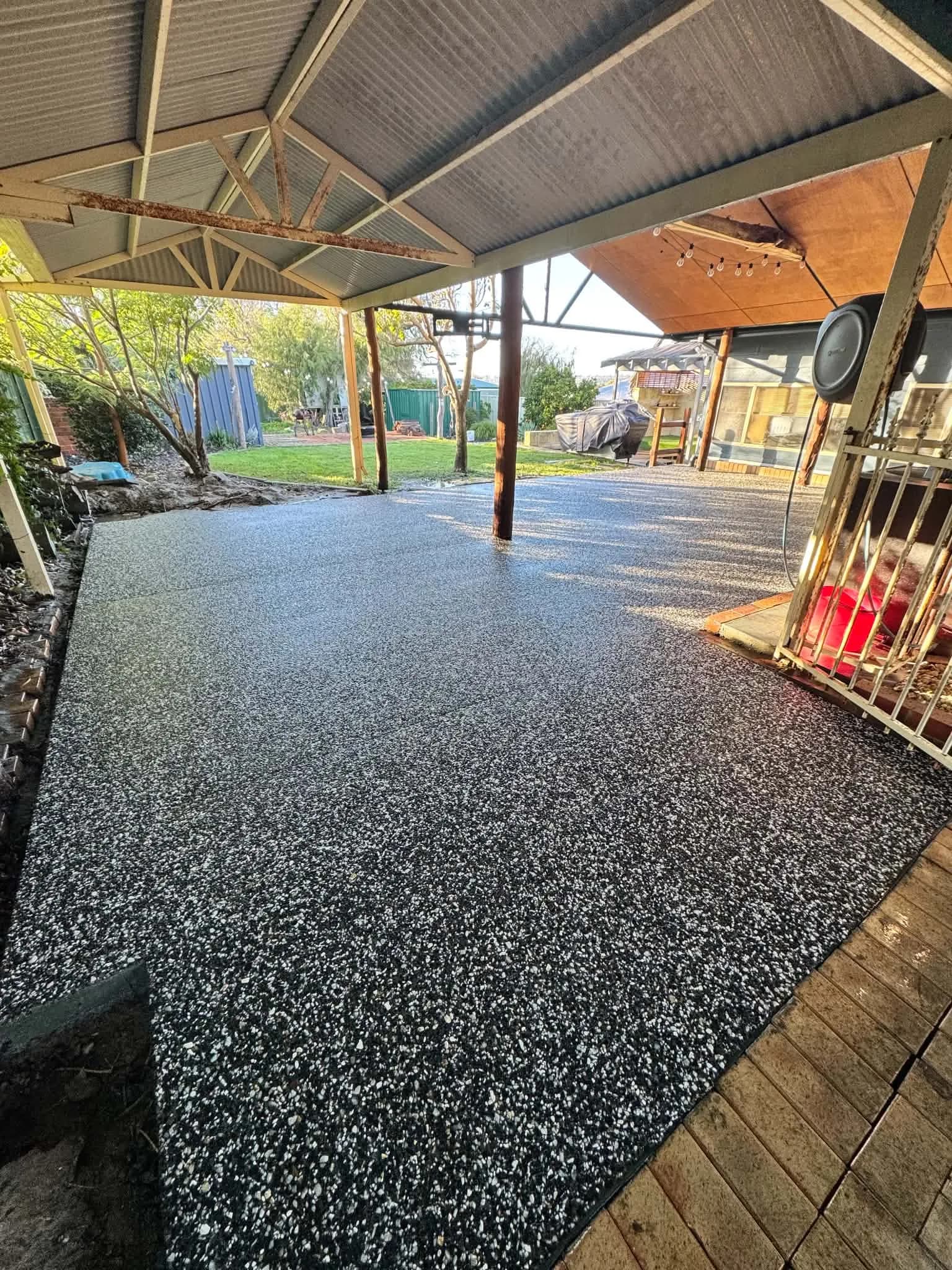
Outdoor polished concrete: alfresco, patio and the indoor-outdoor floor
Outdoor polished concrete usually means honed. Glare, heat, grip, sealers and how to run one finish from the living room to the alfresco, patio and pool in WA.
 Guide
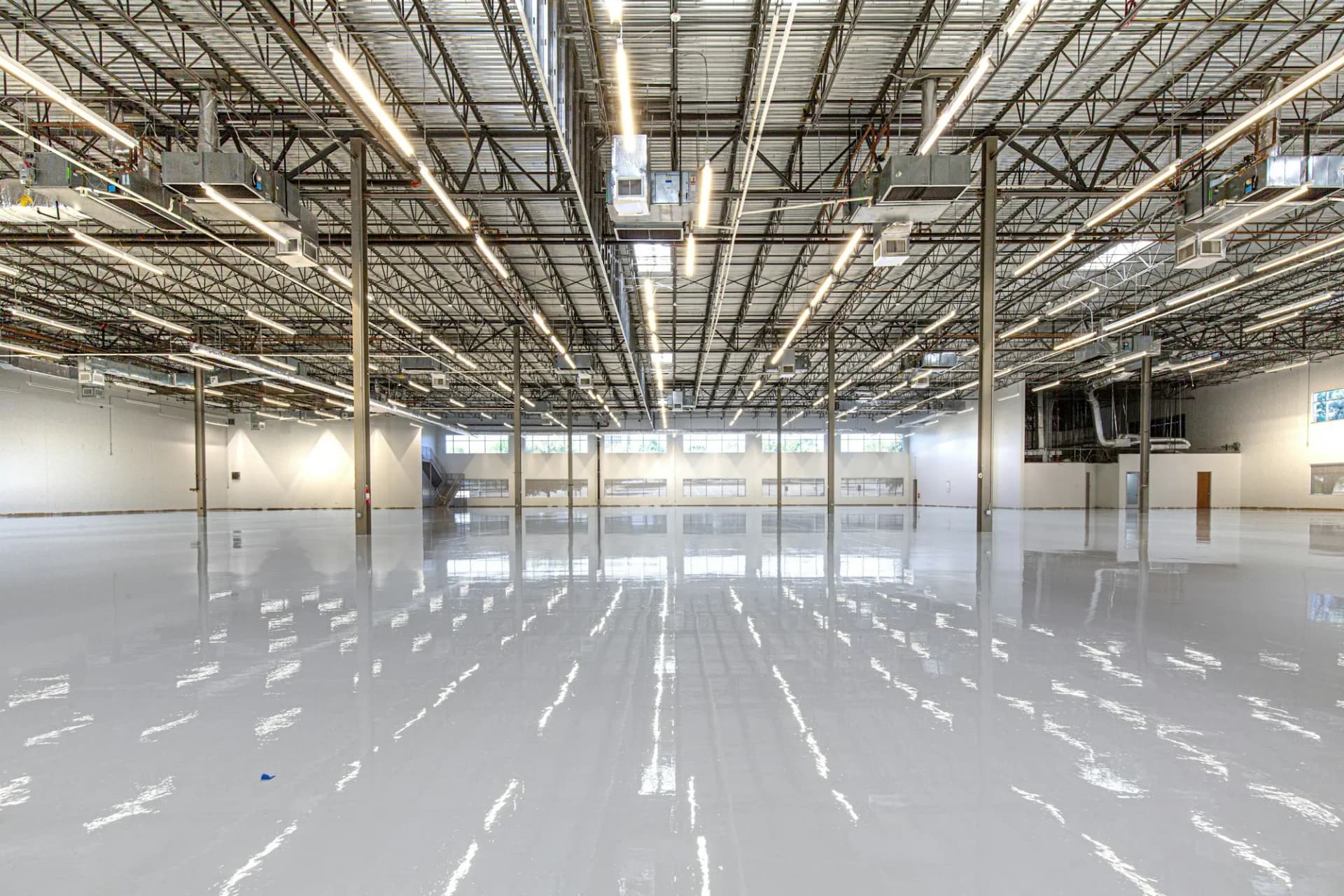
Polished concrete vs epoxy: which floor for a workshop, warehouse or shop
Polished concrete vs epoxy for a workshop, warehouse, shop or garage: wear, peeling, chemical resistance, downtime, upkeep and where grind and seal fits in.
 Guide
Polished concrete vs tiles: which floor makes sense
Is polished concrete cheaper than tiles? Often, on a new slab. How cost, grout, wet areas, comfort and resale compare, and why you can't polish over tiles.
 Guide
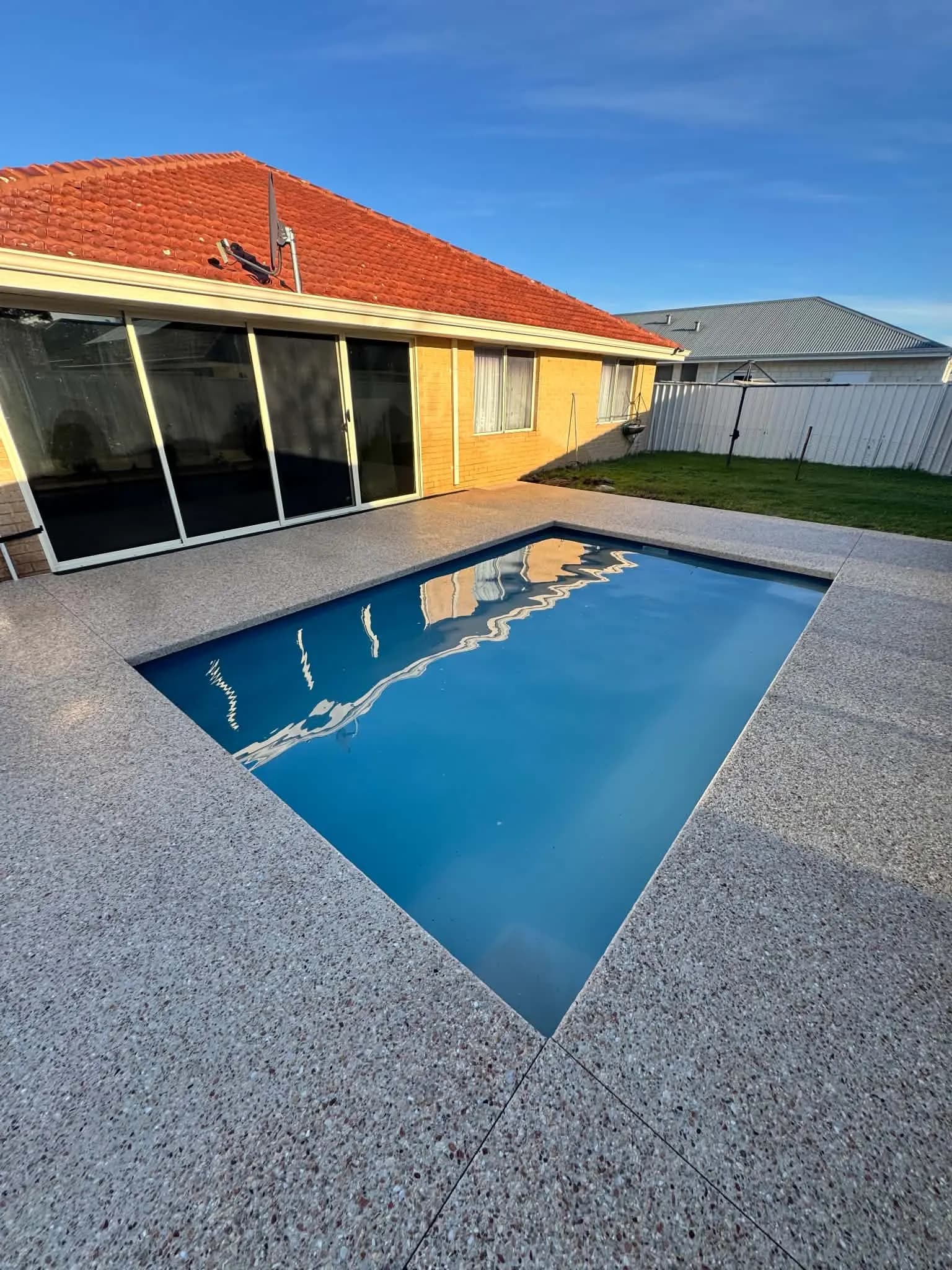
Exposed aggregate vs honed and polished concrete
Exposed aggregate, honed or polished aggregate: how each is made, how they differ on grip, cleaning and look, and which suits a driveway, pool or floor in WA.
 Guide
How to clean polished concrete floors
Everyday cleaning, what never to use, stains, and when a polished, honed or burnished floor needs resealing. Plain maintenance advice from Bunbury, WA.
 Guide
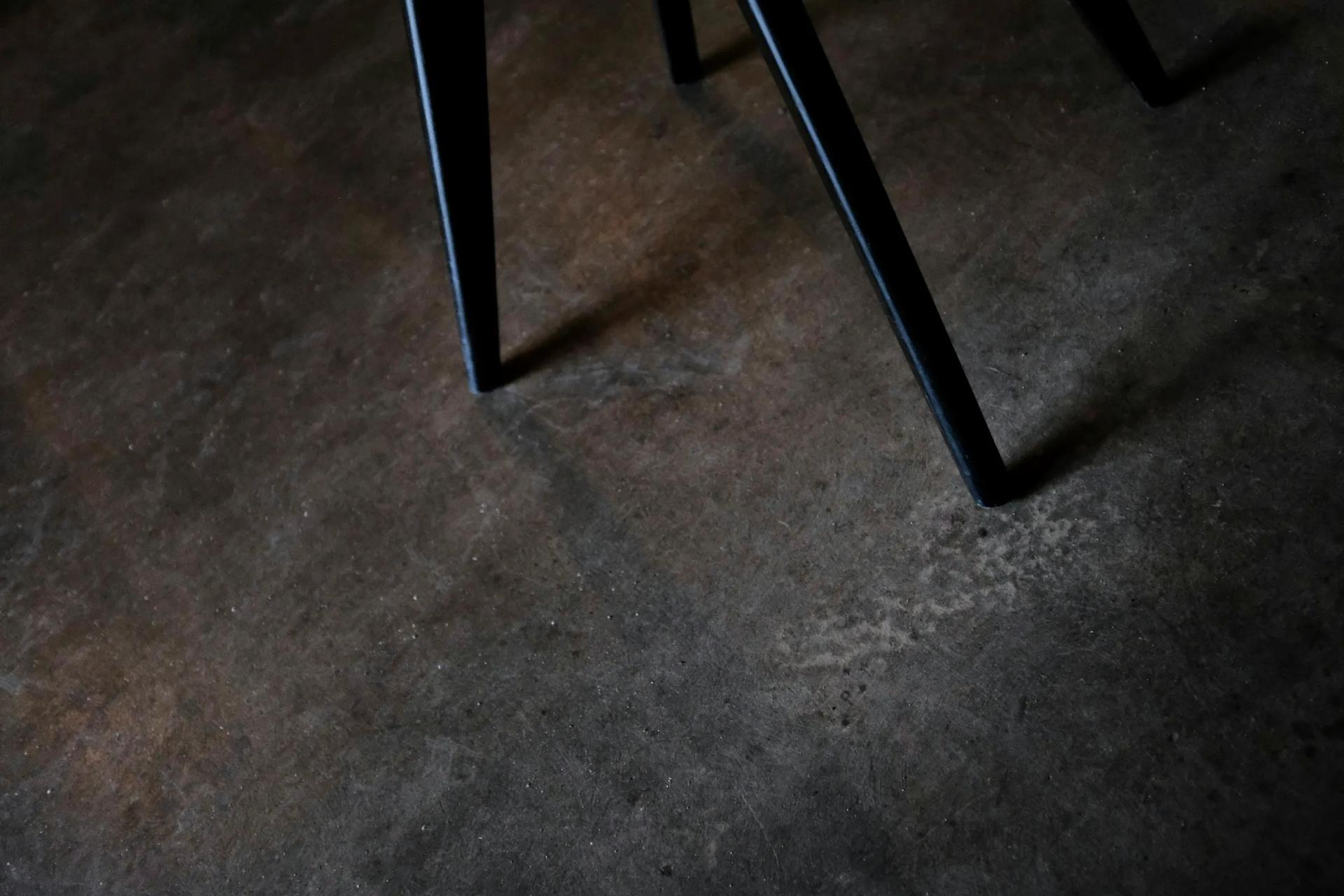
Polished concrete colours: what decides the final look
White, grey, black or aggregate? Where polished concrete colour comes from (cement, stone, oxides, sheen) and what you can choose on a new or existing slab.
 Guide
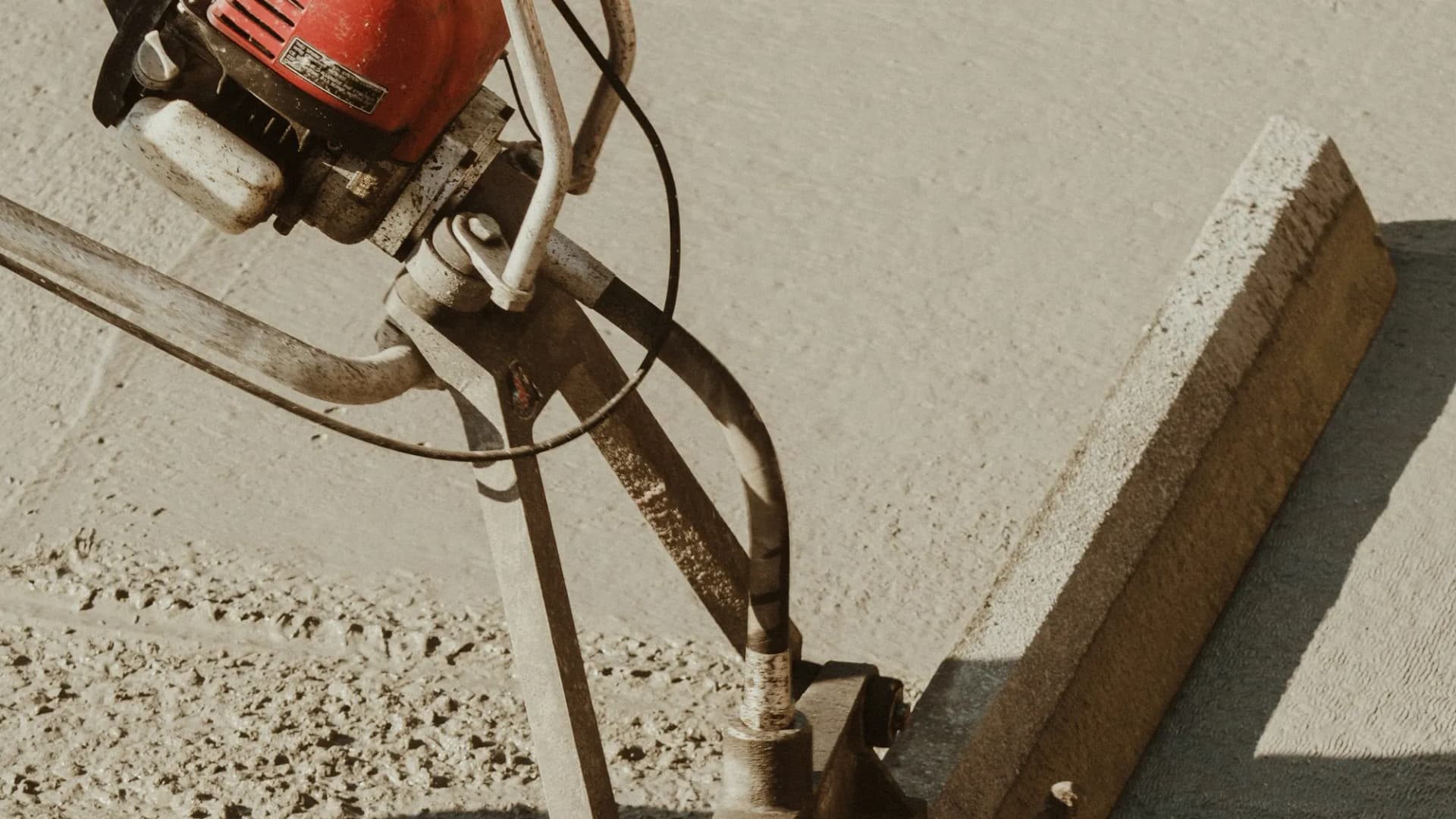
Polished concrete on an existing slab: can it be done?
Can an old slab be polished? What we check, what the slab decides for you, when an overlay or topping is the answer, and why a new slab is planned differently.
 Guide
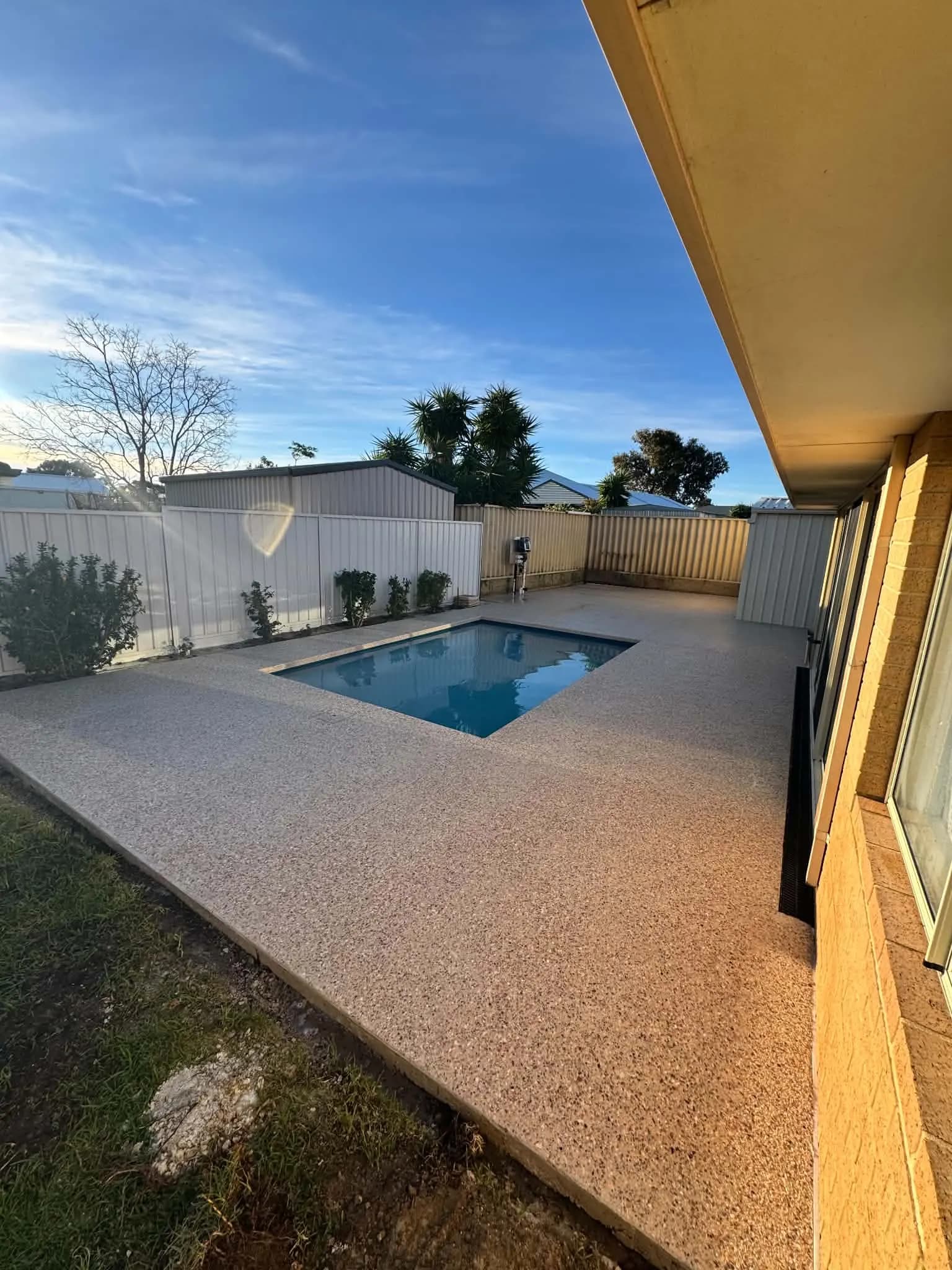
Concrete pool surround finishes: honed or liquid limestone?
Honed concrete or liquid limestone for a pool surround? How the finishes differ on grip, heat, glare and upkeep, and how to choose in WA.
 Guide
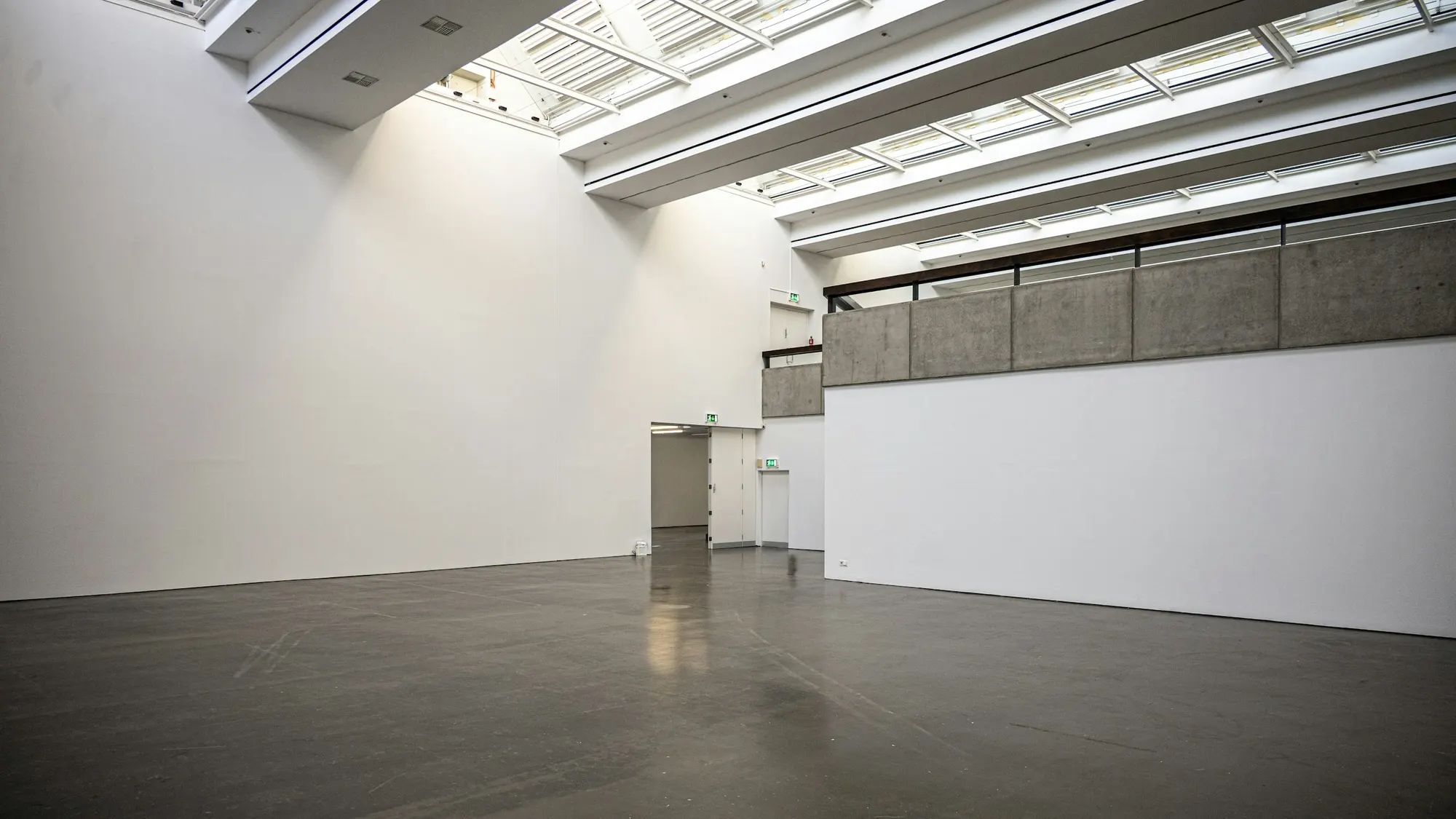
Is polished concrete slippery?
Is polished concrete slippery when wet? What decides grip, where a lower sheen suits better, and what to ask before you choose a finish.
 Guide
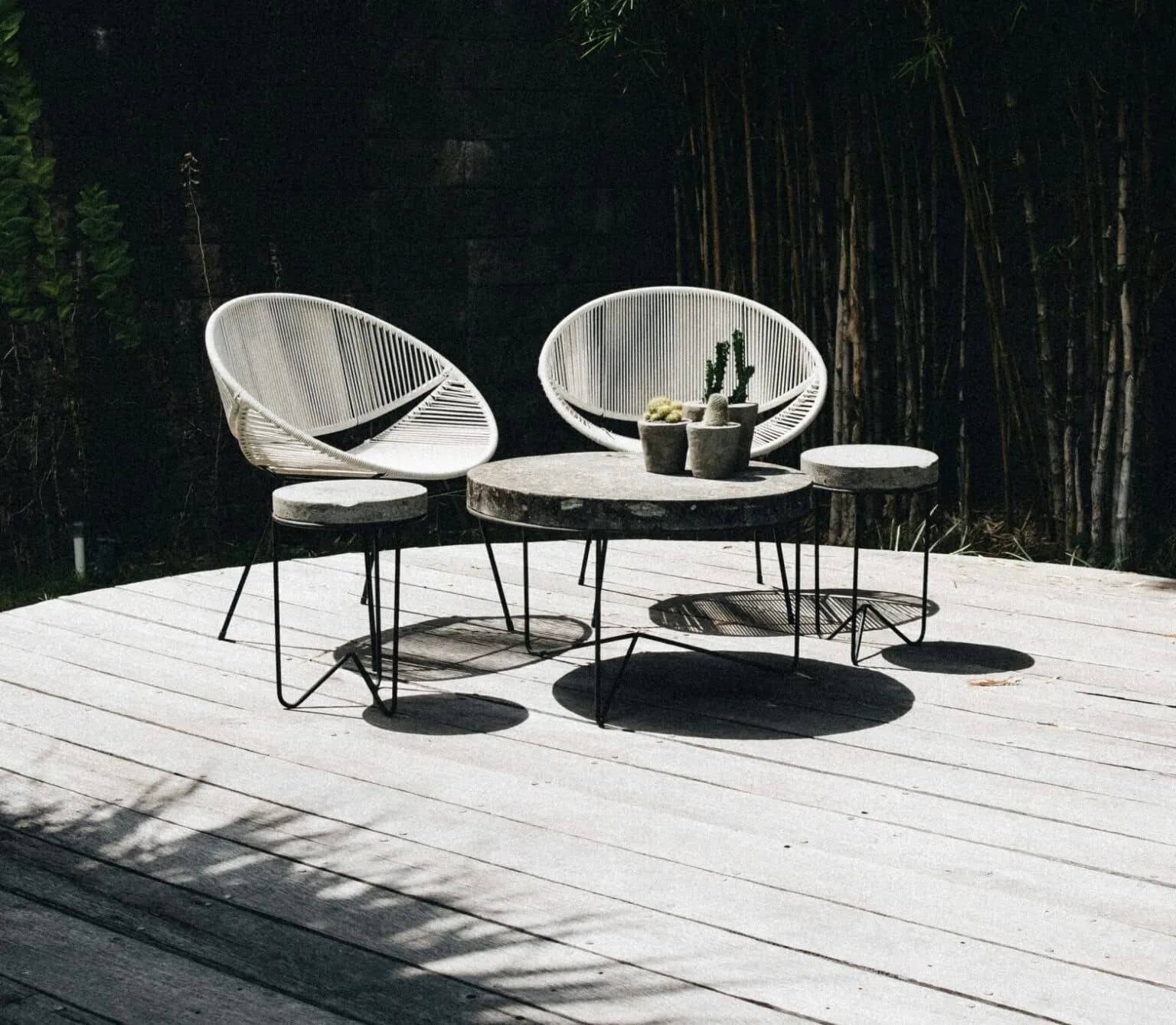
Concrete benchtops and furniture: what to plan first
Thinking about a polished concrete benchtop or custom concrete furniture? What it is, how it is made, and what to plan before you order in WA.
 Guide
Polished concrete cost: what decides the price
What drives the cost of polished concrete floors: slab condition, area, level of finish and access. How to get an accurate quote in Bunbury and WA.