
Outdoor polished concrete: alfresco, patio and the indoor-outdoor floor
The alfresco is where South West homes live for half the year, and the most common request we get in Bunbury is for the polished floor inside to keep going outside. It can, with one change: outdoors, the finish is honed rather than polished. This is why, and how to plan it.
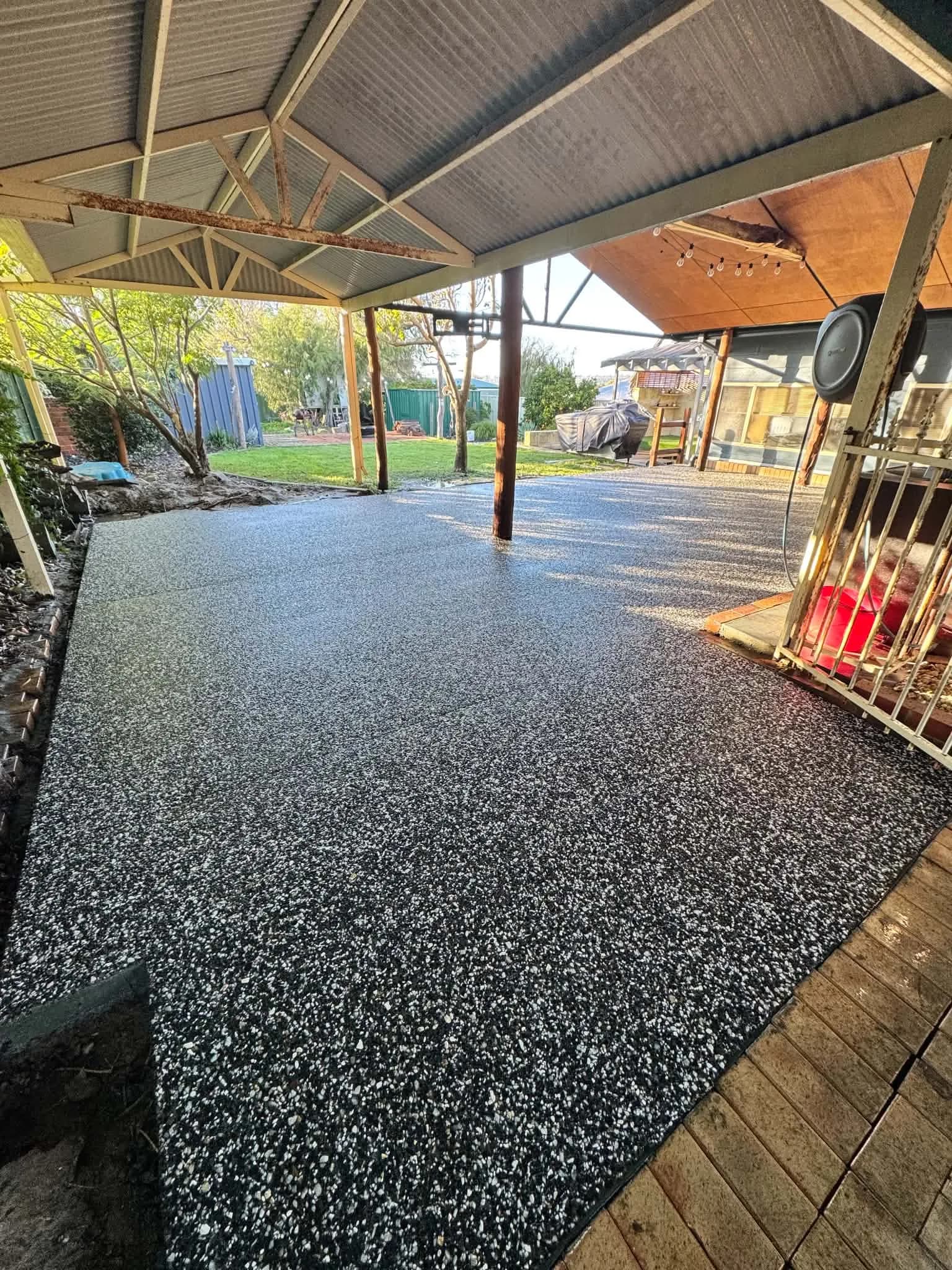
Why "polished" outdoors means honed
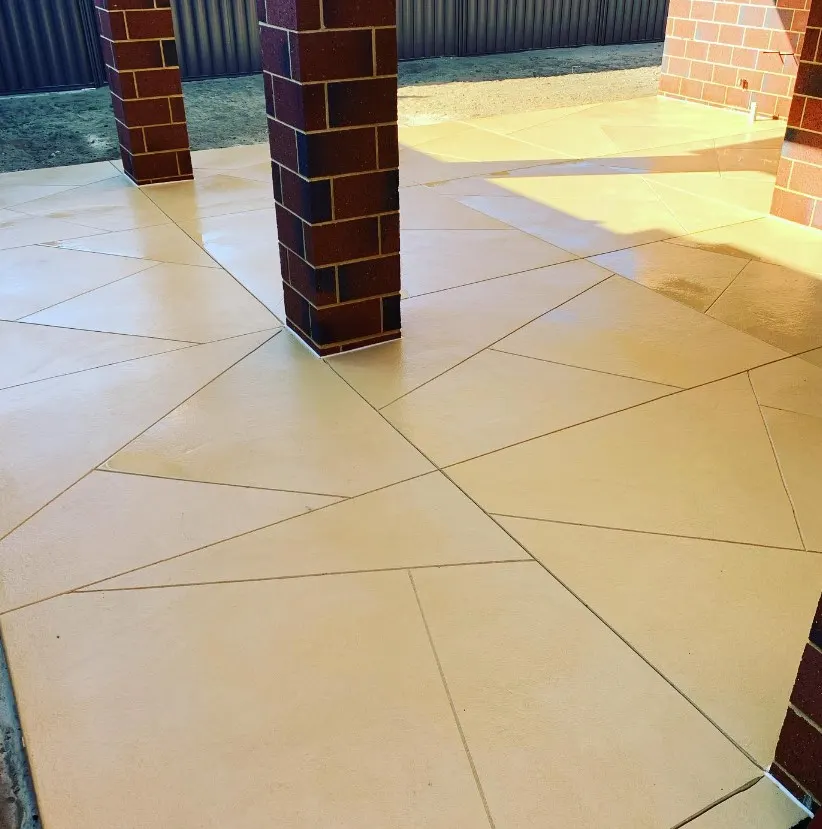
Polished concrete is ground through fine grits until it reflects light. Outdoors that reflection becomes glare at midday and a slippery surface when it rains or the pool splashes. Honed concrete stops the grind earlier, so the surface is flat and smooth but matte. The stone and colour show the same way, the surface stays comfortable barefoot, and the sealer is chosen for grip. If you have seen a photo labelled outdoor polished concrete that you like, it is almost certainly honed.
The indoor-outdoor floor
The best result comes from one slab poured for both areas, with the same mix and the same aggregate, so the colour and stone match across the door line. Inside gets polished to the sheen you want. Outside gets honed and sealed for weather. The join sits at the threshold, and from the living room the floor reads as one surface running out to the alfresco.
If the house is already built and the alfresco slab is separate, we can still match closely, but a different pour means slightly different concrete. We show you samples from your own slabs before committing.
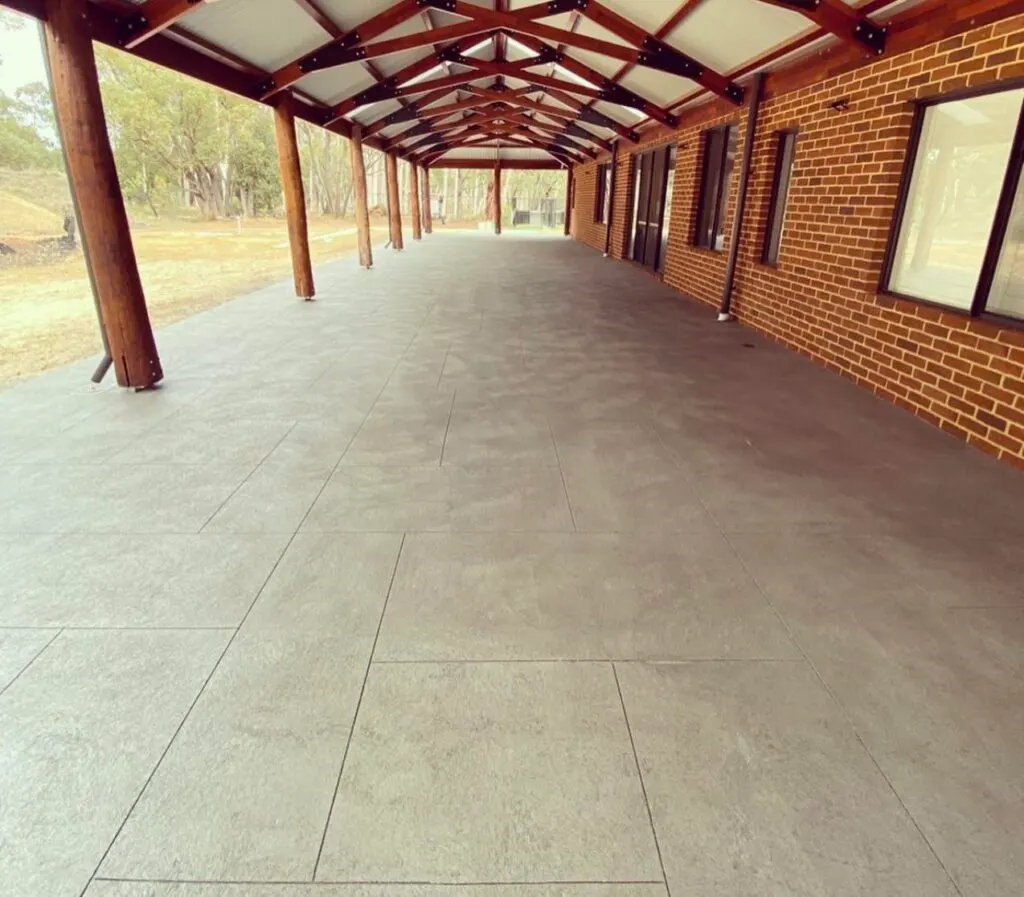
Heat, glare and grip
- Heat. Concrete holds heat like any paving. A paler mix, a matte finish and shade from the roof line keep it usable in January. For a pool deck in full sun, liquid limestone stays cooler underfoot than grey concrete.
- Glare. A honed surface scatters light rather than reflecting it, which is the main reason it replaces polish outdoors.
- Grip. Comes from the finish level and the sealer. A penetrating sealer leaves the natural matte texture. An acrylic sealer deepens colour and can take a grip additive. For a pool surround, read our pool surround guide.
Patios, paths and the driveway
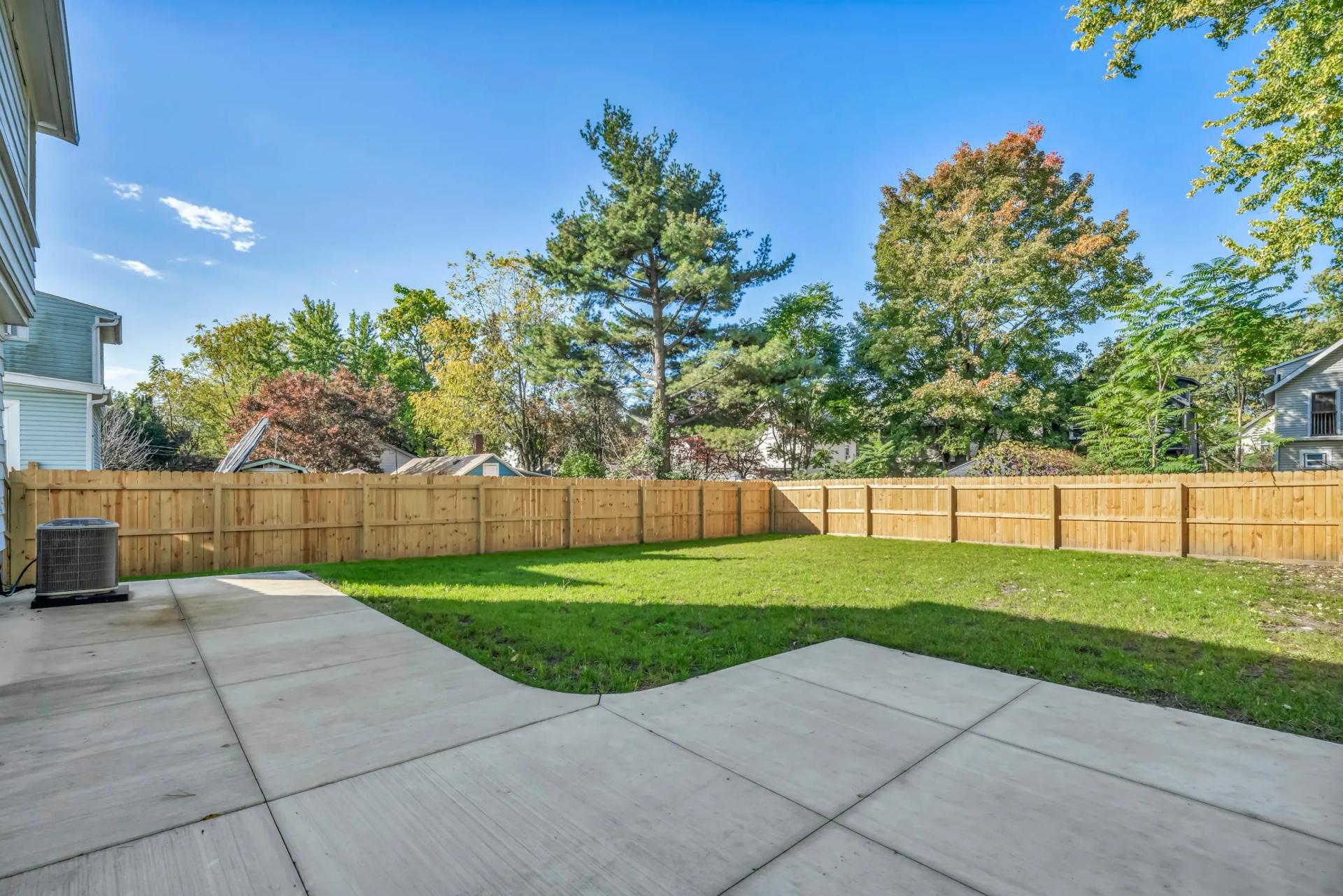
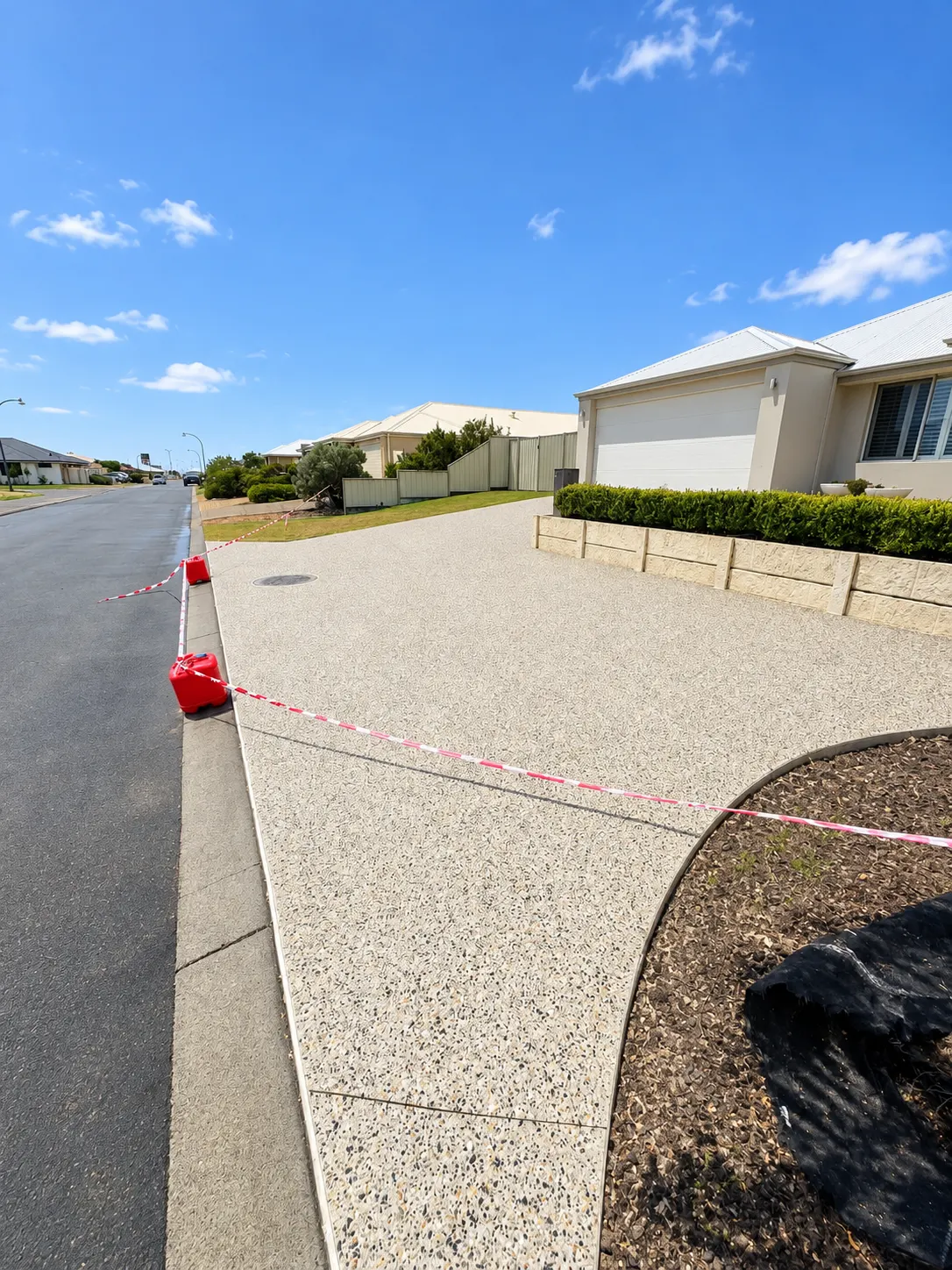
Honed concrete works on any outdoor slab: the patio, the path to the front door, steps, and the driveway. Doing them in one finish ties the outside of the house together, and the same crew can pour and finish all of it. Sloped paths and driveways get a coarser finish or a grip sealer. Flat entertaining areas can go smoother.
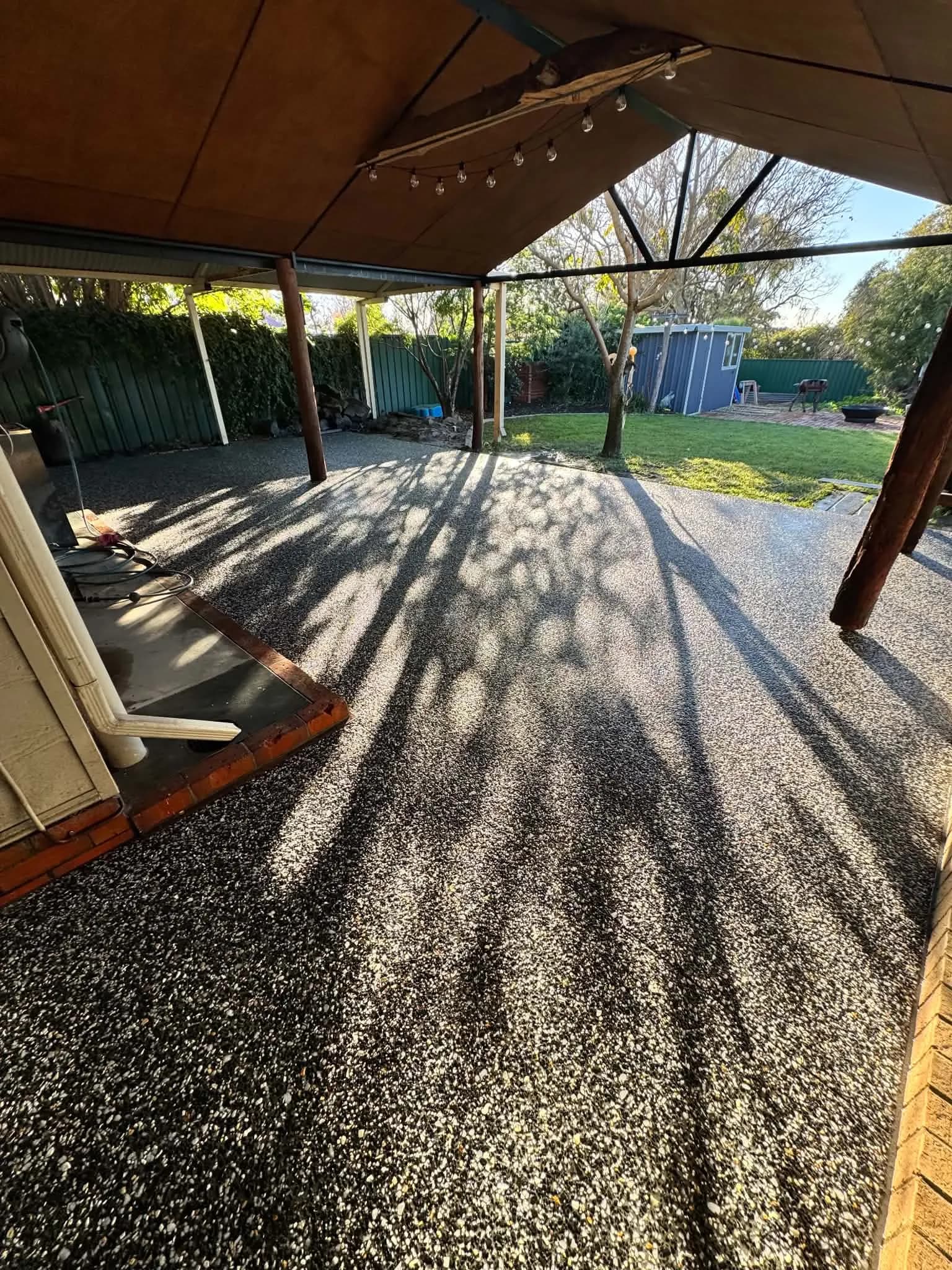
Upkeep outdoors
An outdoor honed floor is hosed and brushed, not mopped. Leaves, sand and fertiliser should not sit on it for weeks. The sealer is reapplied every few years depending on sun and traffic, and that is the whole maintenance list. Compared with pavers, there are no joints for weeds and no ants lifting the surface.
Furniture to match
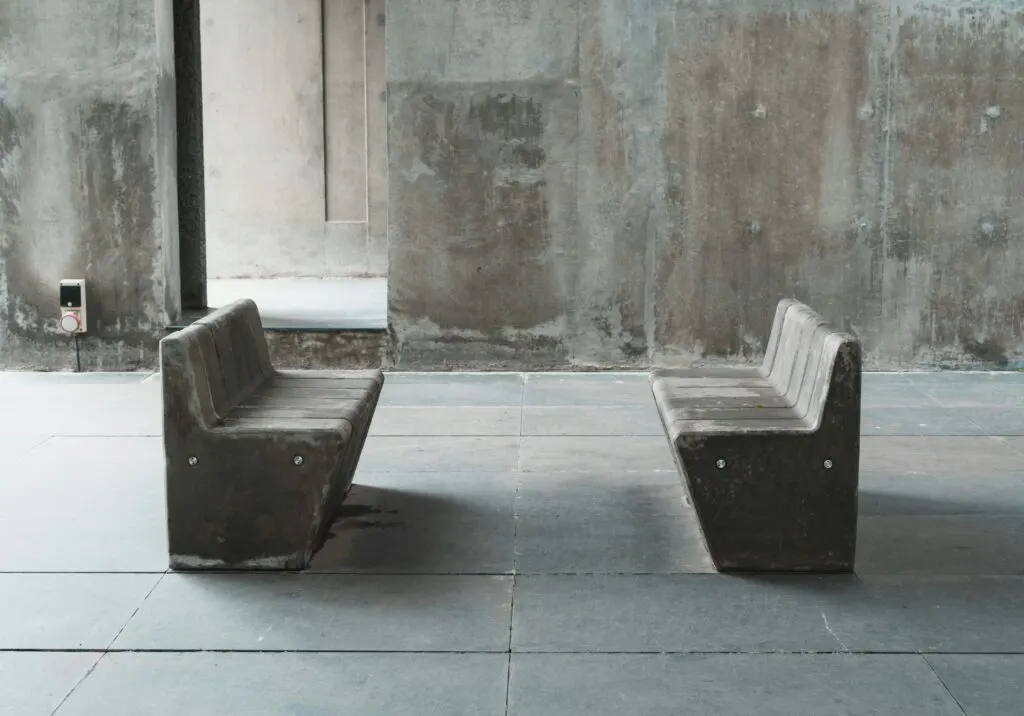
An outdoor table or bench cast from the same concrete finishes the space. See concrete furniture.
Where we work: Bunbury and the South West of Western Australia.
Common questions
- Can polished concrete be used outdoors?
- A high-gloss polish is not suited to outdoor use because it is slippery when wet and glary in sun. What people call outdoor polished concrete is normally honed concrete: ground flat and matte, then sealed for grip. It gives the same look without the shine.
- Does outdoor concrete get too hot to walk on?
- Dark concrete in full sun gets hot, as any dark paving does. A pale slab, a honed rather than glossy surface and some shade keep it comfortable. Liquid limestone is the coolest-feeling option we lay.
- What sealer is used on outdoor honed concrete?
- Either a penetrating sealer, which soaks in and leaves the surface matte, or an acrylic sealer, which sits on top and deepens the colour. Grip additive goes into the acrylic for wet areas. We choose based on the look you want and how wet the area gets.
Related services
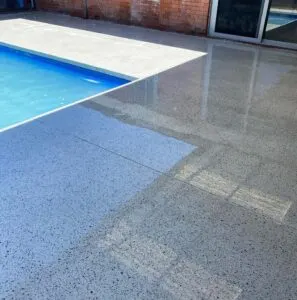 Service
Honed concrete
 Service
Liquid limestone
 Service
Polished concrete
 Service
Concrete patios
 Service
Concrete driveways and paths
 Service
Concrete furniture
 Who we work for
Residential
More guides
 Guide
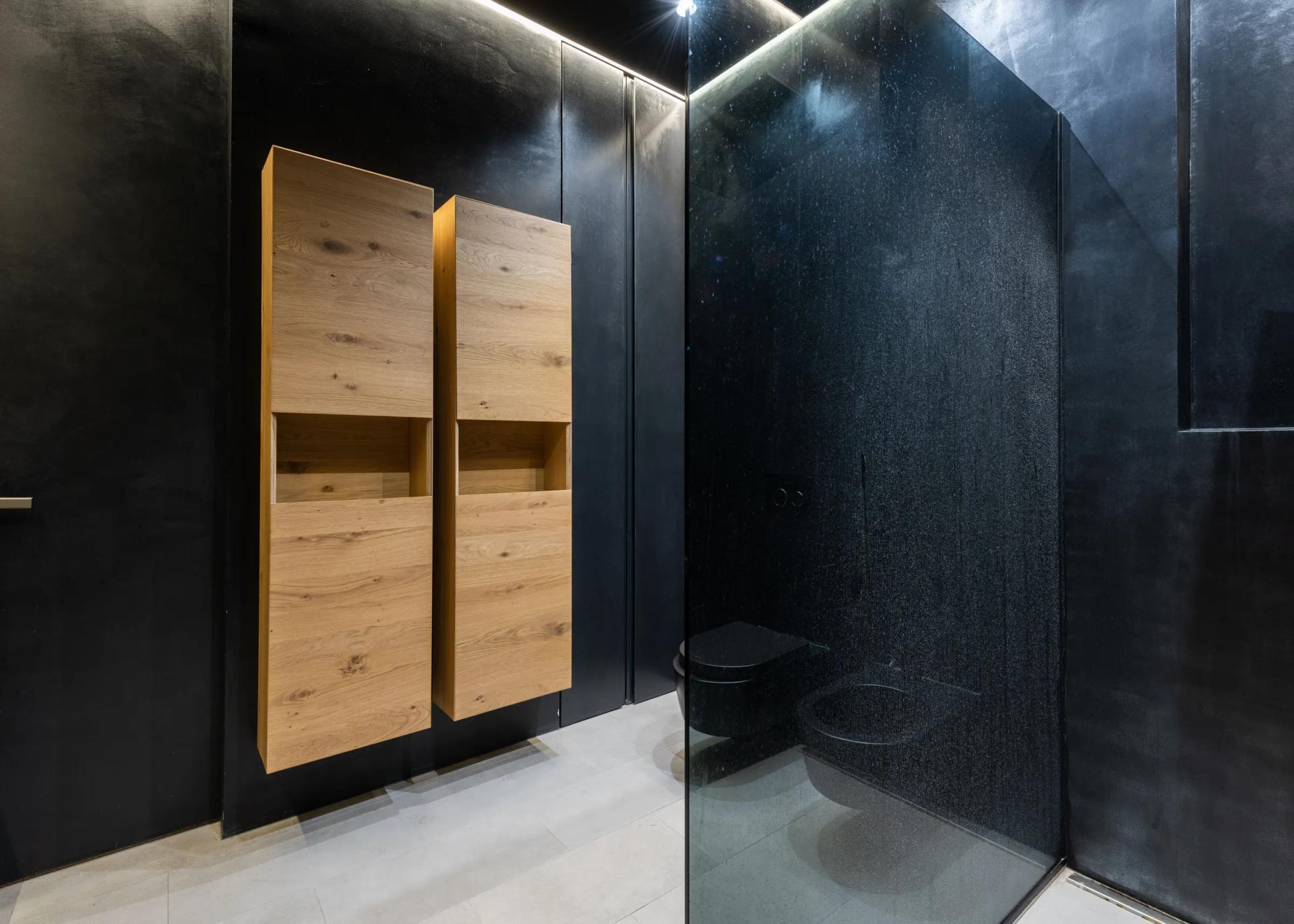
Polished concrete bathroom floors: waterproofing, falls, grip and walls
Polished concrete bathroom floors in WA: where the waterproofing sits, falls to the waste, grip in the shower, sealer for a wet room, walls and hobs.
 Guide
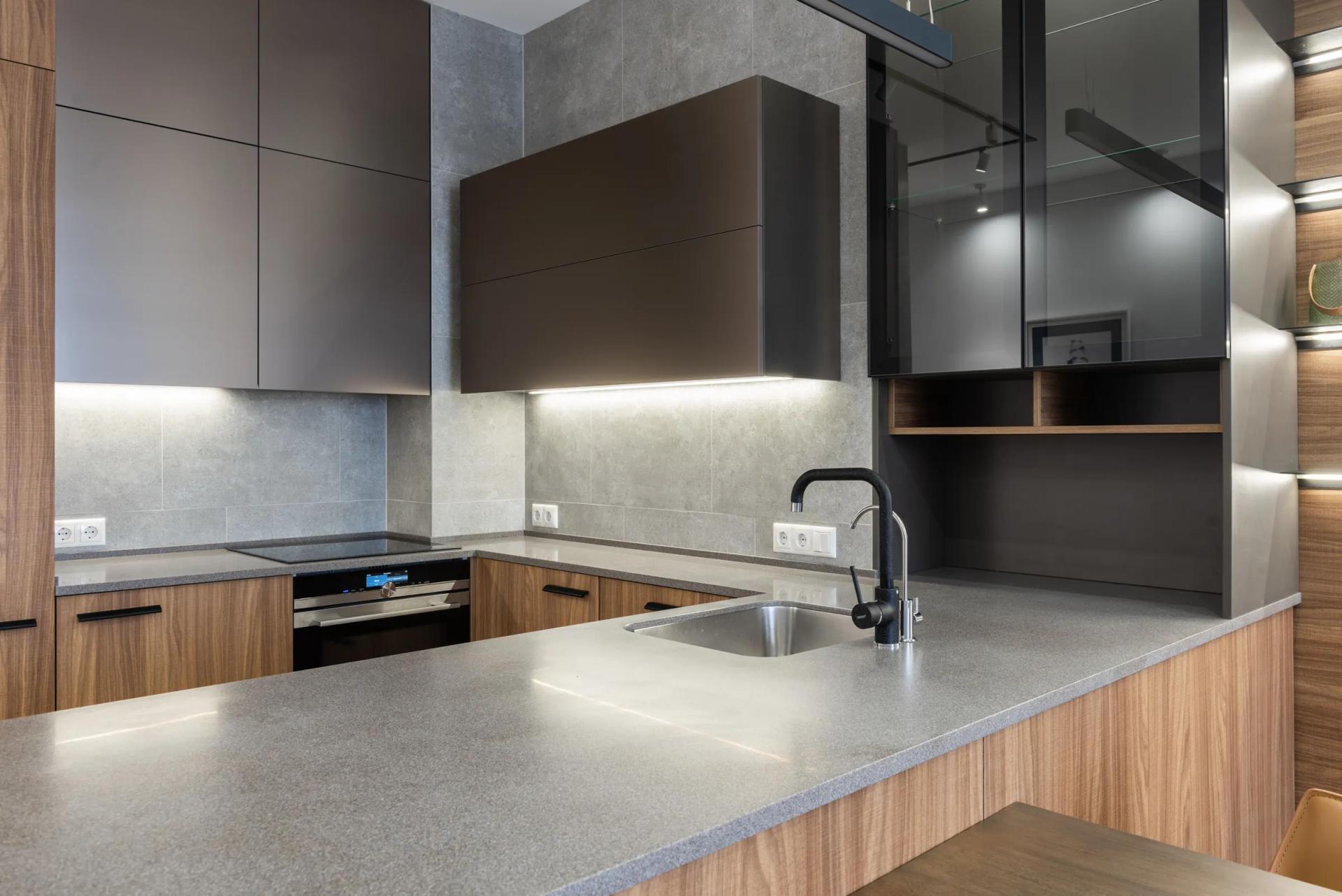
Polished concrete kitchen floors: stains, chips, warmth and the benchtop
Polished concrete kitchen floors in WA: oil, wine and lemon stains, dropped plates, warmth and hydronic heating, colour, the benchtop and open plan.
 Guide
Concrete sealers explained: penetrating vs acrylic, and how often to reseal
Penetrating vs acrylic concrete sealers: which suits polished, honed, burnished, liquid limestone and exposed aggregate, how often to reseal and the signs.
 Guide
Polished concrete finish levels: aggregate exposure, sheen and grind and seal
Cream, salt and pepper or full exposure; matte, satin or high gloss; grind and seal or mechanically polished. Polished concrete finish levels explained.
 Guide
Types of concrete finishes for patios, and how to pick one
Six concrete finishes for a patio compared: plain, honed, liquid limestone, exposed aggregate, coloured and stamped. Grip, heat, glare, upkeep and cost in WA.
 Guide
Polished concrete garage floors: what to know before you decide
Is a polished concrete garage floor a good idea? Tyre marks, oil, sheen, new slab versus old, and when burnished or sealed suits a garage or shed better in WA.
 Guide
Polished concrete vs epoxy: which floor for a workshop, warehouse or shop
Polished concrete vs epoxy for a workshop, warehouse, shop or garage: wear, peeling, chemical resistance, downtime, upkeep and where grind and seal fits in.
 Guide
Polished concrete vs tiles: which floor makes sense
Is polished concrete cheaper than tiles? Often, on a new slab. How cost, grout, wet areas, comfort and resale compare, and why you can't polish over tiles.
 Guide
Exposed aggregate vs honed and polished concrete
Exposed aggregate, honed or polished aggregate: how each is made, how they differ on grip, cleaning and look, and which suits a driveway, pool or floor in WA.
 Guide
How to clean polished concrete floors
Everyday cleaning, what never to use, stains, and when a polished, honed or burnished floor needs resealing. Plain maintenance advice from Bunbury, WA.
 Guide
Polished concrete colours: what decides the final look
White, grey, black or aggregate? Where polished concrete colour comes from (cement, stone, oxides, sheen) and what you can choose on a new or existing slab.
 Guide
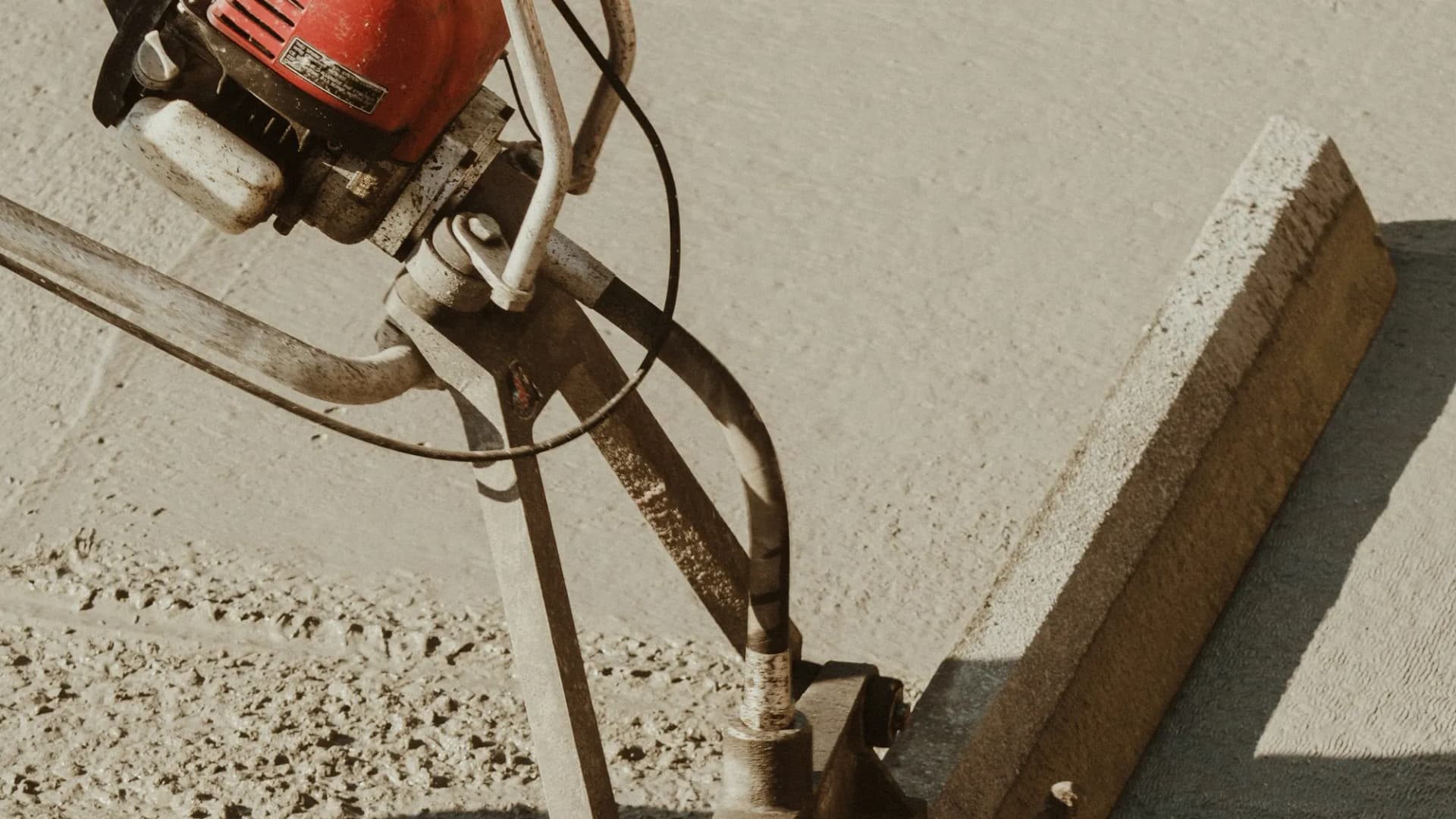
Polished concrete on an existing slab: can it be done?
Can an old slab be polished? What we check, what the slab decides for you, when an overlay or topping is the answer, and why a new slab is planned differently.
 Guide
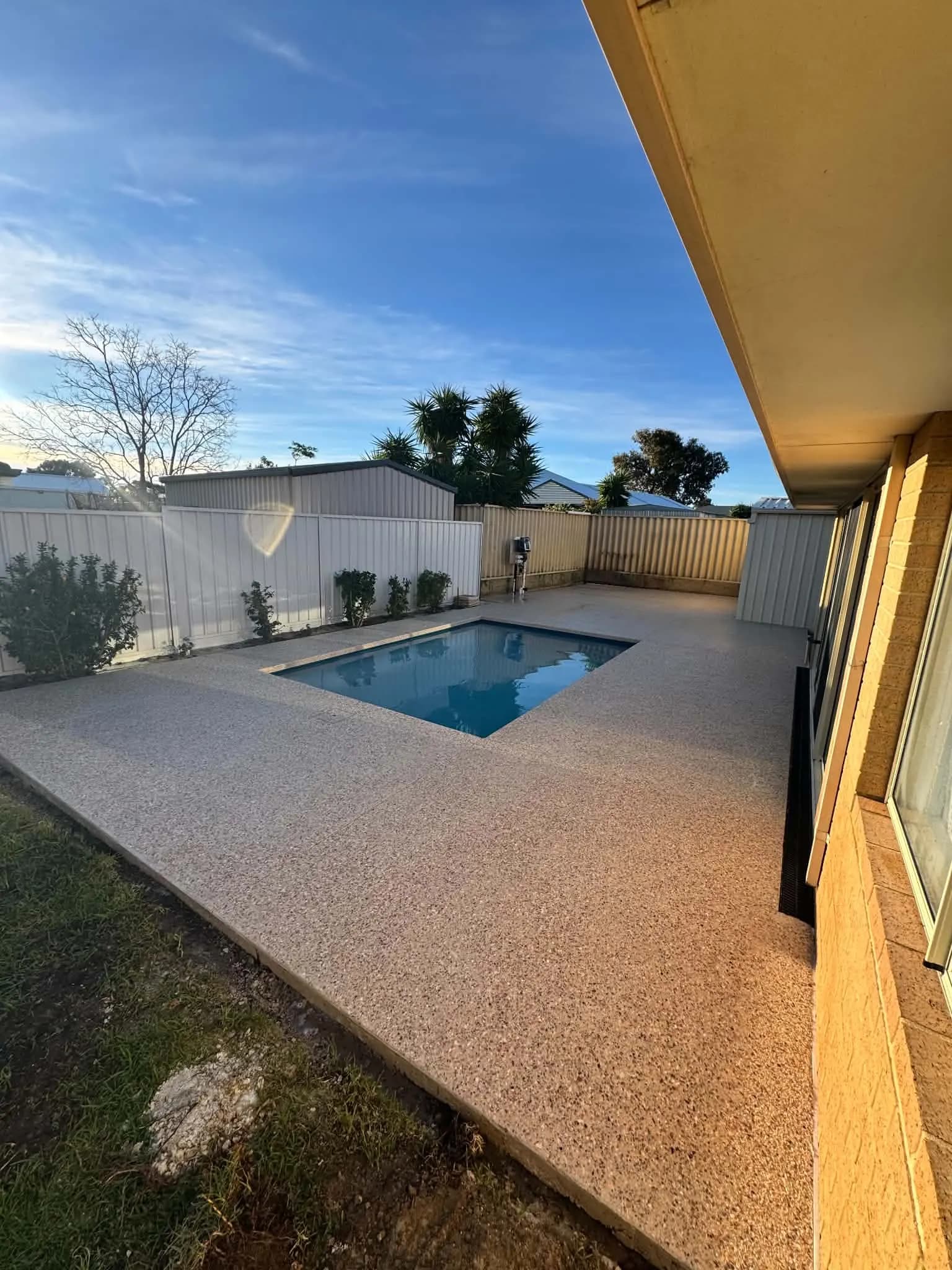
Concrete pool surround finishes: honed or liquid limestone?
Honed concrete or liquid limestone for a pool surround? How the finishes differ on grip, heat, glare and upkeep, and how to choose in WA.
 Guide
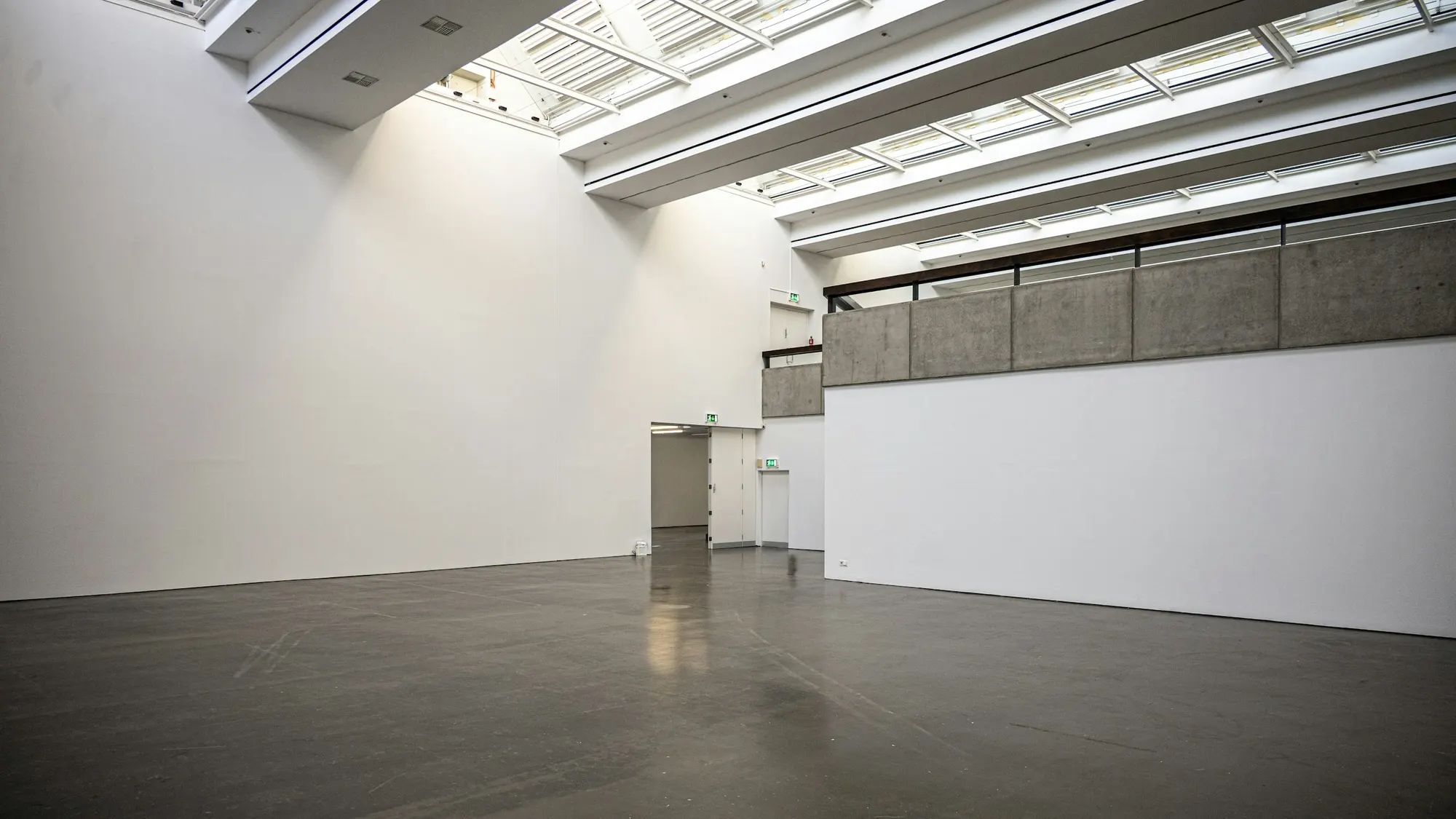
Is polished concrete slippery?
Is polished concrete slippery when wet? What decides grip, where a lower sheen suits better, and what to ask before you choose a finish.
 Guide
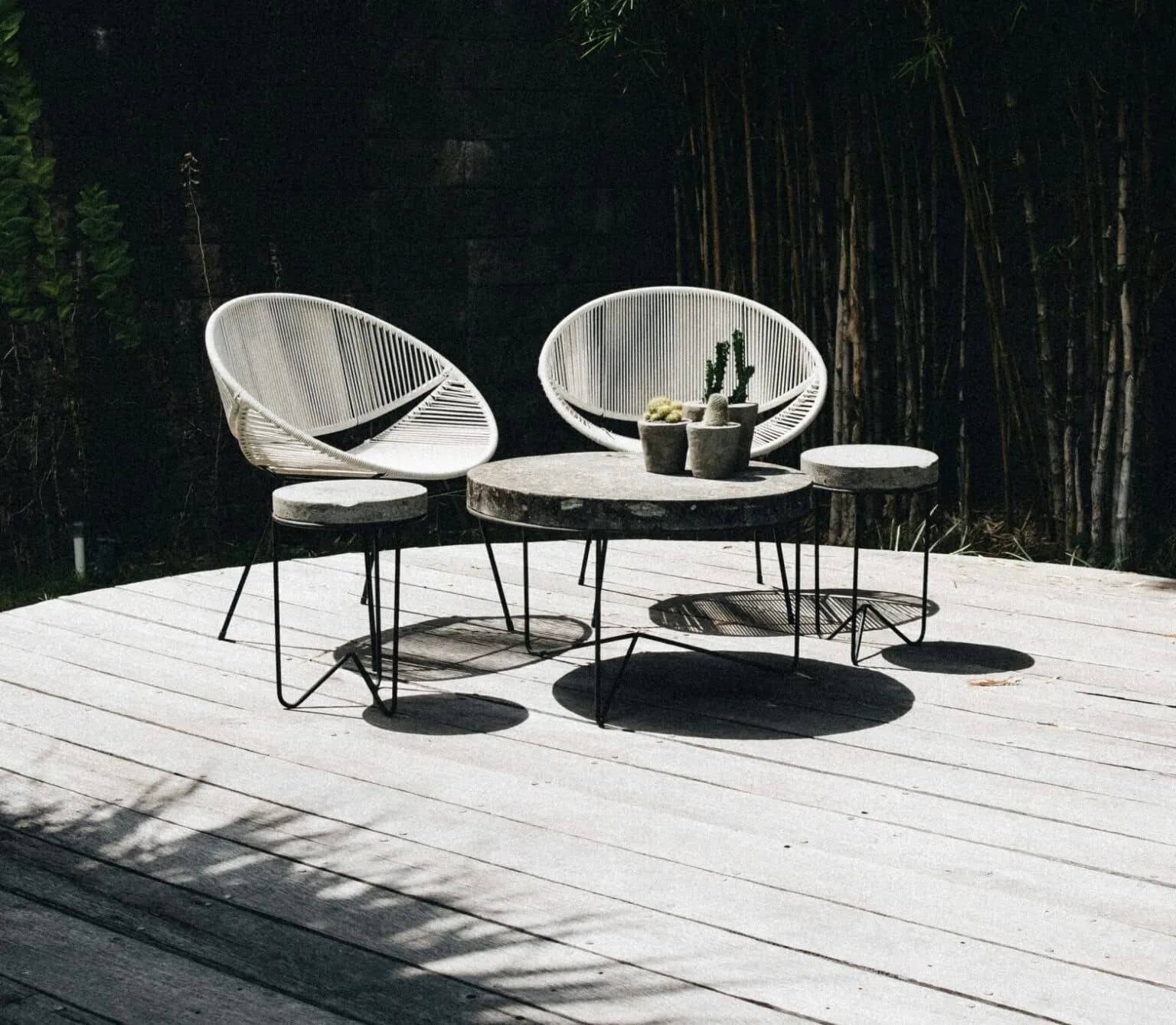
Concrete benchtops and furniture: what to plan first
Thinking about a polished concrete benchtop or custom concrete furniture? What it is, how it is made, and what to plan before you order in WA.
 Guide
Polished concrete cost: what decides the price
What drives the cost of polished concrete floors: slab condition, area, level of finish and access. How to get an accurate quote in Bunbury and WA.